Fatiha (Açılış)
Al-Fatihah (The Opening)
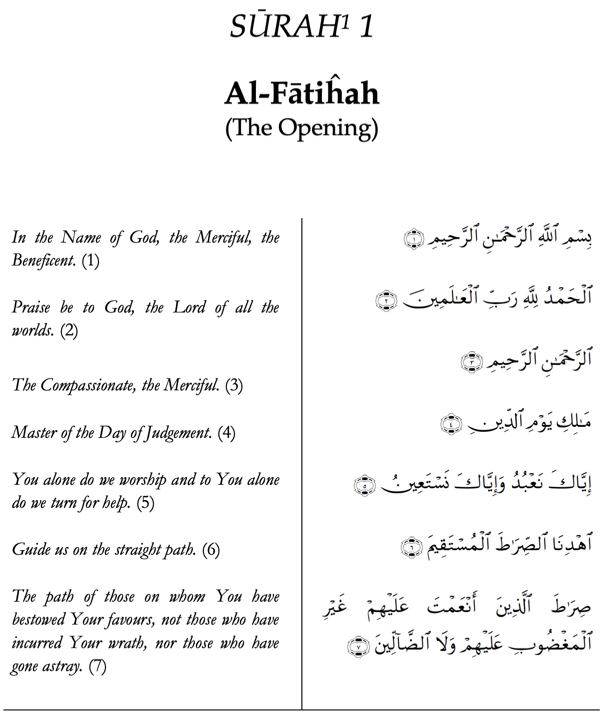
Rahman ve Rahim olan Allah'ın adıyla. (1) Note: The rules require writing "God" as the Turkish word for God rather than "Allah", so the translation should read: Rahman ve Rahim olan Tanrı'nın adıyla. (1)
In the Name of God, the Merciful, the Beneficent. (1)
Âlemlerin Rabbi Allah'a hamd olsun. (2) Note: Following your rules, "God" is rendered as "Allah" would be avoided; the correct Turkish term for God is "Tanrı", so the faithful translation is: Âlemlerin Rabbi Tanrı'ya hamd olsun. (2)
Praise be to God, the Lord of all the worlds. (2)
Rahmân ve Rahîm olan (Allah'ın adıyla). (3) Din gününün sahibi. (4)
The Compassionate, the Merciful. (3) Master of the Day of Judgement. (4)
Yalnız Sana ibadet ederiz ve yalnız Senden yardım dileriz. (5)
You alone do we worship and to You alone do we turn for help. (5)
Bizi doğru yola ilet. (6)
Guide us on the straight path. (6)
Nimet verdiğin kimselerin yoluna; gazaba uğrayanların ve sapkınların yoluna değil. (7)
The path of those on whom You have bestowed Your favours, not those who have incurred Your wrath, nor those who have gone astray. (7)
Genel Bakış
Overview
Sure, Kur'an'ın bir birimünün adıdır. En yakın İngilizce karşılığı "chapter" (bölüm) kelimesidir, ancak "sūrah" kelimesi Arapçada yalnızca Kur'an'ın birimlerini belirtmek için kullanıldığından, İngilizcede olduğu gibi korunmuştur. Kur'an'da uzunlukları farklı olan 114 sure vardır.
1 Sūrah is the name of a unit of the Qur’ān. The nearest English word is ‘chapter’, but since sūrah’ is used in Arabic to denote only units of the Qur’ān, it has been retained in English. The Qur’ān has 114 sūrahs of varying length.
Her Müslüman, bu kısa ve yedi âyetten oluşan sureyi günde en az on yedi kez okur. Peygamber Muhammed ﷺ'in sahih bir hadisi şöyledir: "Fâtiha okumayan kimsenin namazı geçersizdir." Bu kısa sure, İslâm'ın temel fikirlerinden, inanç ve kavramlarından pek çoğunu içermektedir. İslâm'ın esaslı anlayış ve tutumlarının birçoğunu ana hatlarıyla ortaya koymaktadır. Tüm bunlar, neden sık sık okunmak üzere seçildiğini ve namazın geçerliliği için neden vazgeçilmez olduğunu açıkça göstermektedir.
Every Muslim recites this short sūrah of seven verses at least seventeen times a day. An authentic ĥadīth of the Prophet Muĥammad (peace be upon him), says: “A prayer by one who does not read the Fātiĥah is invalid.” This short sūrah contains a great deal of the central basic ideas of Islam, its beliefs and concepts. It outlines many of its essential perceptions and attitudes. All this makes it clear why it is chosen for frequent recitation and why it is essential for the validity of prayer.
Sure te şu ifadeyle açılır:
The sūrah opens with the phrase:
Rahmân ve Rahîm olan Allah'ın adıyla. (Ayet 1) Note: The rules require "God" to be written as the Turkish word for God, not "Allah". Correcting that now: Rahmân ve Rahîm olan Tanrı'nın adıyla. (Ayet 1)
In the name of God, the Compassionate, the Merciful. (Verse 1)
Çoğu âlimin görüşüne göre bu, kendi başına bir sûrenin ayetidir ve sûrenin ayetlerini yediye tamamlar. Ancak aynı ifadenin açılış cümlesi olarak geçtiği diğer sûrelerde de bunun böyle olup olmadığı konusunda ihtilaf vardır. Bazı âlimler, şu Kur'an ifadesinin Fâtiha'yı kastettiğini savunur: "Sana yedi tekrarlanan (ayet) ve bu yüce Kur'ân'ı verdik." (15: 87)
This is recognized by the majority of scholars as a verse of the sūrah, in its own right, completing its verses into seven. There is, however, a difference of opinion over whether this is so with respect to all other sūrahs of the Qur’ān in which the same words appear as the opening phrase. Some scholars maintain that it is to the Fātiĥah that the following Qur’ānic statement refers: “We have given you seven oft- repeated verses and this sublime Qur’ān.” (15: 87)
Peygamber Muhammed'e ﷺ ilk indirilen Kur'an ayetleri, "Yaratan Rabbinin adıyla oku..." (96: 1) diyerek başlar ve her işin başında Allah'ın adını anmanın İslami edebini ortaya koyar. Bu, "Evvel de O'dur, ahir de O'dur, zahir de O'dur, batın da O'dur" (57: 3) olan Allah'ın varlığının temel İslami ilkesiyle de uyumludur. Gerçekten var olan O'dur; var olan her şeyin kaynağı ve varlık sebebi O'dur. Bu nedenle her hareket ve her eylem O'nun adıyla yapılır ve her şey O'nun adıyla başlar.