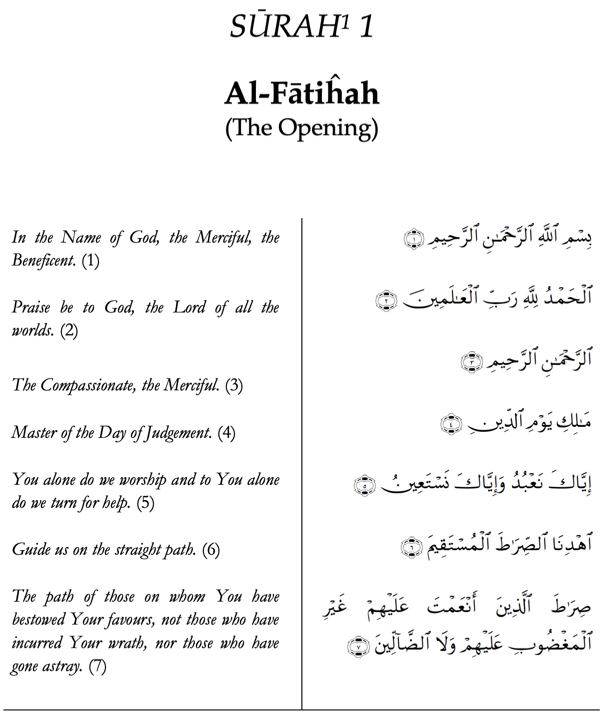
هر مسلمانی این سورهٔ کوتاه هفتآیهای را دستکم هفده بار در روز تلاوت میکند. حدیثی صحیح از پیامبر محمد ﷺ روایت شده که فرمود: «نمازِ کسی که سورهٔ فاتحه را نخواند، باطل است.» این سورهٔ کوتاه بسیاری از اندیشهها و مفاهیم بنیادین اسلام، یعنی عقاید و مبانی آن را در بر دارد و بسیاری از تصورات و نگرشهای اساسی آن را بیان میکند. همهٔ اینها روشن میسازد که چرا این سوره برای تلاوتِ مکرر برگزیده شده و چرا خواندن آن برای صحت نماز ضروری است.
Every Muslim recites this short sūrah of seven verses at least seventeen times a day. An authentic ĥadīth of the Prophet Muĥammad (peace be upon him), says: “A prayer by one who does not read the Fātiĥah is invalid.” This short sūrah contains a great deal of the central basic ideas of Islam, its beliefs and concepts. It outlines many of its essential perceptions and attitudes. All this makes it clear why it is chosen for frequent recitation and why it is essential for the validity of prayer.
این سوره با عبارت زیر آغاز میشود:
The sūrah opens with the phrase:
به نام خداوند بخشنده مهربان. (آیه ۱)
In the name of God, the Compassionate, the Merciful. (Verse 1)
این آیه بهعنوان آیهای مستقل از سوره، توسط اکثر علما پذیرفته شده است که با آن، آیات سوره به هفت آیه کامل میشود. با این حال، دربارهی اینکه آیا این امر در مورد همهی سورههای دیگر قرآن که همین عبارت در آغاز آنها آمده است نیز صادق است یا نه، اختلاف نظر وجود دارد. برخی از علما بر این باورند که آیهی زیر به سورهی فاتحه اشاره دارد: «و به تو هفت آیهی مثانی و قرآن عظیم عطا کردیم.» {الحجر: ۸۷}
This is recognized by the majority of scholars as a verse of the sūrah, in its own right, completing its verses into seven. There is, however, a difference of opinion over whether this is so with respect to all other sūrahs of the Qur’ān in which the same words appear as the opening phrase. Some scholars maintain that it is to the Fātiĥah that the following Qur’ānic statement refers: “We have given you seven oft- repeated verses and this sublime Qur’ān.” (15: 87)
اولین آیات قرآن که بر پیامبر محمد ﷺ نازل شد و با این آیه آغاز میشود: «بخوان به نام پروردگارت...» (سورهی علق، آیهی ۱)، آدابِ اسلامیِ یاد کردنِ نامِ خدا در آغازِ هر کاری را برقرار میسازد. این امر با اصلِ بنیادینِ اسلامی نیز سازگار است که خداوند «اوّل و آخر، ظاهر و باطن» است. (سورهی حدید، آیهی ۳) او در حقیقت، هستیِ راستین، منشأ و علّتِ وجودِ همهی موجودات است. از این رو، هر حرکت و هر کاری به نام او انجام میشود و هر چیزی به نام او آغاز میگردد.
The very first verses of the Qur’ān revealed to Prophet Muĥammad, which begin with: “Read in the name of your Lord...” (96: 1) establish the Islamic etiquette of invoking the name of God at the beginning of every action. This is also in line with the fundamental Islamic principle that God is “the first and the last, the outward and the inward.” (57: 3) He is indeed the real being, the origin and the raison d’être of all that exists. In His name, therefore, every movement and action is made, and in His name everything begins.
صفات الهی «الرّحمٰن» و «الرّحیم» همهٔ جنبهها و معانی رحمت را در بر دارند، و این دو تنها در کنار هم و تنها دربارهٔ خداوند متعال به کار میروند. به کار بردن صفت «الرّحیم» دربارهٔ انسان شایسته است، اما آیین اسلام ایجاب میکند که کاربرد «الرّحمٰن» منحصر به خداوند باشد. اما بحث دربارهٔ اینکه کدام یک از این دو صفت، معنای گستردهتری از رحمت و مهربانی را دربردارد، به ما مربوط نمیشود. با این حال میتوان نتیجه گرفت که وقتی این دو با هم آورده شوند، همهٔ جنبهها و ابعاد رحمت را در بر میگیرند.
The divine attributes of the Compassionate, al-Raĥmān, and the Merciful, al-Raĥīm, encompass all aspects and meaning of mercy, and can only be used together with respect to God Almighty. It would be appropriate to use the attribute of al-Raĥīm in reference to a human being, but the Islamic faith requires that use of al-Raĥmān is exclusive to God. As for the debate over which of the two adjectives denotes the wider meaning of mercy and compassion, it does not concern us here. We can conclude, however, that when combined, they encompass all aspects and dimensions of mercy.
همانگونه که یاد نام خداوند در آغاز هر کاری نخستین اصل بنیادین ایمان اسلامی را تشکیل میدهد، محدود ساختن کاربرد «الرحمن» و «الرحیم» به خداوند یکتا، دومین اصل است و رابطهٔ میان خدا و انسان را تعیین میکند. کسی که نام خداوند را یاد کرده و بیپایانی رحمت او را پذیرفته است، به ستایش خداوند و شناخت حاکمیت مطلق او بر همهٔ موجودات فرا خوانده میشود:
As the invocation of God’s name at the beginning of every action constitutes the first fundamental principle of the Muslim faith, the restriction of the use of al-Raĥmān and al-Raĥīm to God alone constitutes the second principle and defines the relationship between God and man. Having invoked God’s name and acknowledged His infinite mercy, one is directed to praise God and recognize His absolute sovereignty over all beings:
ستایش از آنِ خداوند، پروردگار جهانیان است. (آیه ۲)
Praise be to God, the Lord of all the worlds. (Verse 2)
ستایش خداوند نخستین احساسی است که با یاد خدا در دل مؤمن برانگیخته میشود. زیرا وجود خود انسان نمودی از فضل بیپایان خداوند است که سپاسگزاری و تعظیم نسبت به او را در دل پدید میآورد. نشانههای بخشش و کرم خداوند نسبت به انسان و سایر موجودات در همه جا فراوان است و در هر لحظه دیده میشود. ستایش خداوند در آغاز و پایان هر کاری نیز اصلی بنیادین دیگر در باور اسلامی است. قرآن میفرماید: «او خداست؛ هیچ معبودی جز او نیست. ستایش در آغاز و در پایان از آنِ اوست...» (قصص: ۷۰)
Praise of God is the first feeling aroused in a believer’s heart at the mention of God. For man’s own existence is an aspect of God’s infinite grace, which engenders gratitude and reverence towards God. The manifestations of God’s munificence and generosity to man and other creatures abound everywhere and can be seen at every moment. To praise God at the beginning and at the end of every action is another fundamental principle of the Islamic faith. The Qur’ān says: “He is God; there is no deity but He. To Him belongs praise in the first and in the last...” (28: 70)
با این همه، فضل خداوند چنان است که هرگاه مؤمنی بگوید «الحمدلله»، این گفته به عنوان کاری نیک که از همه چیز برتر است برای او ثبت میشود. عمر بن خطاب، صحابی پیامبر، روایت میکند که پیامبر ﷺ فرمود: مردی گفت: «پروردگارا، تو را ستایش میکنم، آنگونه که شایسته شکوه چهرهی توست و عظمت قدرت توست.» آن دو فرشتهای که همراه آن مرد بودند نتوانستند این سخن را ارزیابی کنند و به خداوند متعال مراجعه کردند. او فرمان داد: «آن را همانگونه که گفته است در نامهی عملش ثبت کنید، و هنگامی که نزد من بازگردد، پاداشش را آنگونه که سزاوار است به او خواهم داد.»
بخش پایانی این آیه، «پروردگار جهانیان»، باور به خدایی مطلق و جهانی را بیان میکند که در هستهی مفهوم اسلامی خدا قرار دارد. خداوند تنها، مطلق و نهایی مالک است و دارای اختیار کامل و مستقل برای تصرف در تمام هستی است. او فرمانروای برتر و فراگیری است که جهان را آفریده و همچنان بر آن نظارت دارد، از آن مراقبت میکند و ثبات و سلامت آن را تضمین مینماید. این رابطهی زنده و پویا میان آفریدگار و آفریده، چشمهی همیشگی حیات برای تمام مخلوقات است. خداوند جهان را آفریده و آن را به حال خود رها نکرده است؛ او همچنان اقتداری زنده و فعال بر آفریدههای خود دارد و آنچه را برای ادامهی زندگی معنادار آنان لازم است به ایشان عطا میکند. این امر شامل تمام مخلوقات خداوند میشود.
Nevertheless, God’s grace is such that when a believer says, ‘praise be to God,’ it is recorded for him as a good deed outweighing everything. `Umar ibn al-Khaţţāb, the Prophet’s Companion, relates that the Prophet (peace be upon him) told how a man once said, “Lord, I praise You as befits the majesty of Your face and the greatness of Your power.” The two angels accompanying that man could not evaluate the remark and referred to God Almighty, who commanded them: “Register it in his record as he said it, and I shall reward him as he deserves when he returns to Me.” The last part of this verse, “Lord of all the worlds”, expresses the belief in absolute universal Godhead which is at the very core of the Islamic concept of God. God is the sole, absolute and ultimate owner with full independent authority to act in the whole cosmos. He is the overall supreme master who has created the world and continues to watch over it, take care of it, and ensure its stability and well-being. This living and dynamic relationship between the Creator and the created is the perpetual fountain of life for all creation. God has not created the world and abandoned it to its own devices. He continues to be an active living authority over His creation, giving it what it needs for its continued and meaningful life. This applies to all God’s creation.
اقرار به ربوبیت مطلق خداوند، تفاوت میان روشنی و سردرگمی را در مورد یگانگی مطلق خداوند رقم میزند. مردم اغلب اعتراف خود به خدا به عنوان تنها آفریننده را با اعتقاد به وجود خدایان متعدد که اختیار زندگی آنان را در دست دارند، ترکیب میکردند. ممکن است عجیب به نظر برسد که مردم چنین باوری داشته باشند، اما این امر در گذشته رایج بود و امروز نیز همچنان وجود دارد. قرآن از کسانی سخن میگوید که ادعا میکنند: «ما آنها را [خدایان فرعی] جز برای این نمیپرستیم که ما را هرچه نزدیکتر به خدا برسانند.» ({الزمر: ۳}) همچنین اشاره میکند که برخی گروههای یهودی و مسیحی «احبار و رهبان خود را به جای خدا، ارباب خویش گرفتهاند.» ({التوبة: ۳۱}) شرک، یعنی پرستش چند خدا یا نیمهخدا در کنار «خدای بزرگ» مورد باور، هنگامی که اسلام در قرن هفتم میلادی در عربستان ظهور کرد، گسترده بود.
Acknowledging God’s absolute Lordship makes all the difference between clarity and confusion with regard to God’s absolute oneness. People often combined their acknowledgement of God as the sole creator with belief in multiple deities having authority in their life. It may seem absurd that people should ever hold such a belief, but this was true in the past and is still true today. The Qur’ān speaks of those who claim that they “only worship them [minor gods] so that they may bring us nearer to God.“ (39: 3) It also mentions that some Jewish and Christian groups who “have taken their rabbis and priests as gods alongside God.” (9: 31) Polytheism, or the worship of several deities or demigods besides the perceived ‘Grand Deity’, was widespread when Islam emerged in the 7th century in Arabia.
اثبات حاکمیت مطلق و اقتدار فعال خداوند یگانه.
The affirmation of the absolute sovereignty and active authority of the One God.
این که بر تمام آفرینش فرمانروایی داشته باشد، برای تضمین عقلانیت و آرامش خاطر انسان و رهانیدن او از سرگشتگی دردناک شرک ضروری بود. انسان باید مطمئن باشد که خدایی هوشیار و مهربان زمام این جهان را در دست دارد و هرگز آن را رها نخواهد کرد یا به حال خود نخواهد گذاشت.
over all creation was necessary to ensure man’s rationality and peace of mind, and to relieve him from the cruel bewilderment of polytheism. Man must be reassured that a vigilant and caring God is in charge of this world and will never abandon or forsake it.
هنگام ظهور اسلام، جهان مملو از باورها و فلسفههای نادرست و ادیان باطلی بود که بر خرافات، افسانهها و اسطورهها بنا شده بودند. بسیار اندکی از آنها درست یا حتی عقلانی بود. از نظر مفهوم خدا و رابطهی او با انسان و جهان، سردرگمیهای اسفباری وجود داشت. این امر به نوبهی خود به سردرگمی در درک انسان از جهان و از جایگاه و نقش خودش در آن منجر میشد.
At the advent of Islam, the world was full of erroneous beliefs and philosophies, and of false religions based on superstition, legend and mythology. Very little of it was true or even rational. As far as the concept of God and His relationship with man and the world was concerned, there was plenty of miserable confusion. This in turn led to confusion in man’s understanding of the world and of his own position and role within it.
ضرورت وجود یک نظام اعتقادی عقلانی، روشن و منسجم تنها زمانی آشکار میشود که به آن دورانهای تاریک تاریخ بشر بنگریم که چنین نظامی در آنها وجود نداشت. آنگاه درمییابیم که چنین افسانههای بزرگ و باورهای نادرست چقدر بر دوش انسان سنگینی میکنند. درباره این موضوع، هنگامی که به بررسی نمونههای مشخص در قرآن بپردازیم، بیشتر سخن خواهیم گفت.
The need for a rational, clear and consistent system of beliefs only becomes apparent when we study those dark periods of human history when there was no such system. We then realize how heavily such great myth and false beliefs weigh on man. There will be more on this when we come to study specific instances in the Qur’ān.
از این نیاز است که اسلام بسیار اهتمام ورزیده تا باورهای انسان را اصلاح کند و مفهوم و ماهیت خداوند و صفات او، و رابطه میان آفریدگار و آفریدگان را به روشنی تمام تبیین نماید.
It is in the light of such need that Islam has taken great care to correct man’s beliefs and define very clearly the concept and nature of God and His attributes, and the relationship between Creator and creation.
این موضوع در مفهوم اسلامیِ توحیدِ خداوند تجلی یافته است؛ یعنی جوهر و بنیادیترین اصل اسلام. تلاش فراوانی صورت گرفته تا این حقیقت تثبیت و روشن شود که خداوند، یگانه، مطلق و متعالی، پروردگار و مالک همهی موجودات است. جنبهی دیگری از این مفهوم که اسلام بیشترین توجه را به آن داشته، تعریف صفات خداوند است؛ امری که در طول تاریخ، موجب بسیاری از سردرگمیها، ابهامها و آشفتگیهای فکری در حوزهی دینی و فلسفی شده است.
This is embodied in the Islamic concept of God’s oneness, the essence and most fundamental principle of Islam. Much care has been devoted to establishing and elucidating the affirmation that God is the One, absolute and transcendent Lord and Master of all that exists. The other aspect of this concept to which Islam has given its greatest attention is the definition of God’s attributes, which has been the cause of much confusion, obfuscation and muddled religious and philosophical thinking through the ages.
شدت، تأکید و جزئیاتی که اسلام درباره مفهوم توحید الهی و همه موضوعات مرتبط با آن بیان کرده است، تنها در پرتو توده عظیمی از باورهای نادرست و الهیات درهمریختهای که در مسیر تاریخ انباشته شده بودند، قابل درک و ارزیابی است. از این منظر، اسلام را به آسانی میتوان بهعنوان رحمتی عمیق و بهموقع از جانب خداوند بر بشریت دید؛ رحمتی که با زیبایی، سادگی، وضوح، هماهنگی و انطباق کامل با سرشت انسانی عرضه شده است.
The intensity, emphasis and detail with which Islam has dealt with the concept of God’s oneness, and all subjects related to it, can only be appreciated against the background of the great mass of erroneous beliefs and confused theologies that had accumulated in the course of history. From this perspective, Islam can readily be seen as a profound and timely act of divine mercy bestowed on humanity — mercy that is given with beauty, simplicity, clarity, harmony and full accordance with human nature.
الرَّحْمَٰنِ الرَّحِيمِ. (آیهٔ ۳)
The Compassionate, the Merciful. (Verse 3)
این دو صفت، همهٔ معانی و جلوههای رحمت و مهربانی را در بر میگیرند و رحمت را بهعنوان یکی از ویژگیهای خداوند متعال به کمال نشان میدهند. این دو صفت، پیوند میان پروردگار بهعنوان آفریدگار و آفریدگانش را تعریف میکنند. این پیوندی است که کاملاً بر پایهٔ عشق، آرامش، اطمینان و مهرورزی استوار است و در انسان احساس شکرگزاری و ستایش خودجوش نسبت به خدا را برمیانگیزد.
These are two attributes that encompass all meanings and aspects of mercy and compassion, and epitomize mercy as a property of God Almighty. These two attributes define the link between the Lord as Creator and His creation. It is a link based entirely on love, peace, reassurance and care, and which inspires within man a spontaneous feeling of gratitude and praise towards God.
برخلاف اساطیر یونانی یا عهد عتیق (سفر پیدایش، ۴: ۱۱-۱۲)، اسلام خداوند را به عنوان دشمنی تصویر نمیکند که با انتقامی بیامان انسان را تعقیب کند، یا با کینه و کینهتوزی علیه مخلوقاتش نقشه بکشد و توطئه کند.
Unlike Greek mythology or the Old Testament (Genesis, 4: 1112), Islam does not depict God as an enemy who pursues man with relentless vengeance, or plots and schemes against His creation with spite and vindictiveness.
مالکِ روزِ جزا۔ (آیهٔ ۴)
Master of the Day of Judgement. (Verse 4)
این آیه اصلی بنیادین اسلامی را بیان میکند که تأثیری عمیق بر زندگی انسان دارد: ایمان به آخرت. قرآن کریم به این واقعیت شگفتانگیز اشاره میکند که مردم اغلب به خدا به عنوان آفریدگار ایمان داشتهاند، اما به روز قیامت، به زندگی پس از مرگ که در آن پاداش و کیفر داده میشود تا تعادل عدالت برقرار گردد، ایمان نیاوردهاند. درباره همین افراد قرآن میفرماید: «و اگر از ایشان بپرسی: چه کسی آسمانها و زمین را آفریده است؟ قطعاً خواهند گفت: خدا» (لقمان: ۲۵). و در جای دیگر درباره چنین کسانی میفرماید: «و تعجب کردند از اینکه بیمدهندهای از خودشان به سوی ایشان آمده است، و کافران گفتند: این چیزی شگفت است! آیا وقتی مردیم و خاک شدیم [بازگردانده میشویم]؟ این بازگشتی بسیار دور از عقل است!» (ق: ۲-۳)
This verse states a fundamental Islamic principle that has a most profound influence on human life: belief in the hereafter. The Qur’ān comments on the curious fact that people have often believed in God as Creator but have failed to believe in a Day of Judgement, in a life to come, when reward and punishment are meted out to restore the balance of justice. It is in reference to these that the Qur’ān says: “If you ask them, ‘Who is it that created the heavens and the earth?’ they will surely answer, ‘God’” (31: 25) Elsewhere the Qur’ān says of such people: “They deem it strange that a warner should have come to them from their own midst. Thus, the unbelievers say, A strange thing is this! [Are we to be resurrected] after we have died and become mere dust? Such a return seems far-fetched indeed!’“ (50: 2-3)
ایمان به آخرت از آن جهت ضروری است که جان و ذهن انسان را درگیر میکند و توجه او را به هستیِ آینده متمرکز میسازد. این امر به نوبهی خود به مهار وسواس انسان نسبت به زندگی حاضر کمک میکند و او را قادر میسازد تا از خواستههای فوری دنیوی فراتر رود. او دیگر نگران آن نیست که همهی پاداشهای خود را همینجا و همیناکنون به دست آورد؛ میتواند خودخواهی خویش را مهار کند و احساسات و علایق نوعدوستانه پرورش دهد. انسان میتواند زندگی را بهعنوان موجودی دارای انگیزه، بردبار، مطمئن و خوشبین سپری کند.
Belief in the hereafter is essential because it engages the human soul and mind and concentrates man’s attention on a future existence. This in turn helps to rein in man’s obsession with the present life, and to transcend his immediate earthly desires. He is no longer anxious to reap all his rewards here and now; he can conquer his selfishness and develop altruistic feelings and interests. Man is able to go through life as a motivated, tolerant, confident and optimistic being.
این باور محوری اسلامی میان تلاش برای دستیابی به آزادی اخلاقی و فکریای که انسان به آن نیاز دارد و سزاوارش است، و تسلیم شدن در برابر خواستهها و لذتهای دنیوی و خودخواهانه، تمایزی روشن قائل میشود. این باور، تفاوت میان بشریتی متعادل و وجداندار را با بشریتی خودمحور و منفعتطلب مشخص میکند.
This central Islamic belief distinguishes clearly between aspiring to gain the moral and intellectual freedom that man needs and deserves, and capitulation to worldly and selfish desires and pleasures. It marks the difference between a well-balanced and conscientious humanity and an egotistic, self-seeking one.
انسانی زندگی هرگز متوازن و عادلانه نخواهد بود تا زمانی که مردم باور نداشته باشند که آنچه در این زندگی گذرا به دست میآورند، همه چیز و پایان همه چیز نیست. انسان به انگیزهای نیاز دارد که با باوری استوار همراه باشد، مبنی بر اینکه زندگی دیگری در انتظار اوست و آن زندگی ارزش تلاش، فداکاری و کوششی را دارد که ممکن است در این زندگی کوتاه بدان نیازمند باشد. این باور تفاوتی بنیادین در احساسات، نگرشها و رفتار کسانی پدید میآورد که به آن پایبندند.
Human life can never be balanced and equitable until people believe that what they earn in this transient life is not the be-all and the end- all. Man needs to have the incentive of a confident belief that another life awaits him, which is worth the struggle and the sacrifices and the effort he may have to make here in this short one. This belief brings a fundamental difference in the feelings, attitudes and behaviour of those who uphold it.
تنها تو را میپرستیم و تنها از تو یاری میجوییم. (آیه ۵)
You alone do we worship and to You alone do we turn for help. (Verse 5)
این آیه اصل بنیادین دیگری را بیان میکند که بهطور منطقی از آیات پیشین نتیجه میشود. این اصل همچنین تعیینکننده و حیاتی است، زیرا مرزی روشن میان آزادیای که انسان با تسلیم شدن در برابر خداوند به دست میآورد، و تحقیر و سوءاستفادهای که در بندگی انسان نسبت به انسان نهفته است، ترسیم میکند.
This verse expresses another fundamental principle that follows logically from the preceding ones. It is also a decisive and crucial principle that draws a line between the freedom man gains in submitting to God and the abuse and debasement implicit in man’s servitude to man.
هنگامی که انسان خود را تسلیم خدا کند و یاری و هدایت را تنها از او بخواهد، به رهایی کامل از استبداد همه قدرتهای دینی، فکری، اخلاقی و سیاسی دست یافته است.
Once man has submitted himself to God and sought help and guidance from Him alone, he has achieved total liberation from the tyranny of all religious, intellectual, moral and political powers.
از نگاه مؤمن به اسلام، قدرت انسانی به دو دسته تقسیم میشود: قدرتی هدایتیافته که خداوند را میشناسد و به دستورهای او پایبند است، و قدرتی متکبر و سرکش که حاکمیت و اقتدار خداوند را نمیپذیرد. مسلمان موظف است که دسته نخست را، هر اندازه ضعیف و محروم باشد، حمایت و تأیید کند، و دسته دوم را، هر اندازه نیرومند و مسلط باشد، طرد کرده و با آن مخالفت ورزد. قرآن میفرماید: «چه بسیار گروههای اندکی که به فرمان خدا بر گروههای بسیار پیروز شدند.» ({البقرة: ۲۴۹}) چنین پیروزی گروه ظاهراً ضعیفتر تنها هنگامی ممکن است که آن گروه به خداوند، سرچشمه همه قدرتها، تکیه کند.
To the believer in Islam, human power falls into two categories: a rightly-guided power that recognizes God and abides by His directions, and an arrogant, rebellious one that does not admit to God’s sovereignty and authority. A Muslim is required to support and endorse the former, no matter how weak or disadvantaged it may be, and to reject and oppose the latter, regardless of its strength or dominance. The Qur’ān says: “Many a small band, by the grace of God, has vanquished a large one.” (2: 249) Such victory of the apparently weaker host could only be achieved when it relies on God, the source of all power.
نسبت به نیروهای طبیعت، نگرش یک مسلمان کنجکاوی و دوستی است، نه ترس یا خصومت. نیروهای انسان و نیروهای طبیعت بهعنوان فرآوردههای جانبی قدرت خود خداوند درک میشوند و تابع اراده اوست. بنابراین، این دو کاملاً مکمل یکدیگر و وابسته به هم هستند.
Towards natural forces, a Muslim’s attitude is one of curiosity and friendliness rather than fear or hostility. The powers of man and the powers of nature are perceived as by-products of God’s own power, and subject to His will. They are, therefore, perfectly complementary and interdependent.
اسلام آموزش میدهد که خداوند جهان مادی و تمام نیروهای آن را برای بهرهمندی و سود خود انسان آفریده است. انسان بهطور مشخص آموزش داده و هدایت میشود که جهان اطرافش را مطالعه کند، تواناییهای آن را کشف نماید و تمام محیط پیرامون خود را برای خیر خود و خیر همنوعانش به کار گیرد. هر آسیبی که انسان از دست طبیعت میبیند، تنها نتیجه نادانی یا عدم درک او از طبیعت و قوانین حاکم بر آن است. هرچه انسان بیشتر درباره طبیعت بیاموزد، رابطهاش با طبیعت و محیط زیست آرامتر و هماهنگتر خواهد بود.
Islam teaches that God has created the physical world and all its forces for man’s own use and benefit. Man is specifically taught and directed to study the world around him, discover its potential and utilize all his environment for his own good and the good of his fellow humans. Any harm that man suffers at the hands of nature is a result only of his ignorance or lack of understanding of it and of the laws governing it. The more man learns about nature, the more peaceful and harmonious his relationship with nature and the environment.
از این رو، مفهوم «تسخیر طبیعت» را به آسانی میتوان نگرشی بدبینانه و منفی دانست. این مفهوم با تصورات اسلامی بیگانه است و نشاندهندهٔ نادانی بیشرمانه نسبت به روحی است که جهان بر آن آفریده شده و نسبت به حکمت الهیای که در پس آن نهفته است.
Hence the notion of “conquering nature” can readily be seen as cynical and negative. It is alien to Islamic perceptions and betrays a shameless ignorance of the spirit in which the world has been created and the divine wisdom that underlies it.
همواره آگاه از دستِ خداوند و نقشِ او در شکلدادن و ادارهکردنِ جهان، مسلمانان نگاهی مثبت، دوستانه و سازنده به رابطهٔ انسان با طبیعت دارند. به بیانِ ساده، این نگرش خداوند را منشأ و آفریدگارِ همهٔ این نیروها میشناسد، بر پایهٔ همان مجموعه اصول و قوانین. این نیروها چنان طراحی شدهاند که با هم، برای هدفی مشترک، در هماهنگی، سازگاری و پشتیبانیِ متقابل کار کنند. نیروهای طبیعت در اصل مسخرِ انساناند، که از نظر ذهنی و جسمی توانِ شناختِ آنها، کشفِ رازهایشان، درکِ قوانینِ حاکم بر آنها، و در پی آن، بهرهگیری از آنها برای بهبودِ کیفیتِ زندگی در زمین را دارد. قرآن کریم میفرماید: «و آنچه را در آسمانها و آنچه را در زمین است، همه را از جانب خود مسخرِ شما ساخت.» (جاثیه: ۱۳)
Being always aware of God’s hand and role in shaping and running the world, Muslims have a positive, friendly and constructive outlook on man’s relationship with nature. Simply stated, it acknowledges God as the origin and Creator of all these forces, on the basis of the same set of axioms and laws. They are designed to function together, for a common purpose, in harmony, compatibility and mutual support. The forces of nature are essentially subservient to man, who is mentally and physically equipped to discern them, unravel their secrets, comprehend the laws governing them and, subsequently, to harness them to improve the quality of life on earth. The Qur’ān asserts: “He has all that is on the earth subservient to you.” (45: 13)
ایسا نقطۂ نظر ہر قسم کے خوف یا تنہائی کے آثار کو مٹا دیتا ہے اور اس کے بجائے ایک گہرے احساسِ تعلق کو جنم دیتا ہے، جس میں انسان کو نہ صرف دنیا کے مجموعی نظام کا ایک لازمی حصہ سمجھا جاتا ہے، بلکہ ایک بنیادی طور پر مؤثر اور اثر انداز ہونے والا وجود بھی۔ یوں اس کی دنیا ایک دوستانہ دنیا بن جاتی ہے۔ اس کا بہترین اظہار نبی ﷺ کے اس قول میں ملتا ہے، جب آپ ﷺ کوہِ اُحد کے سامنے تشریف فرما ہوئے، جو مسلمانوں کی ایک تلخ شکست کا مقام تھا، اور فرمایا: "ہم اس پہاڑ سے محبت کرتے ہیں، اور یہ ہم سے محبت کرتا ہے!" اس ایک جملے میں نبی ﷺ کا فطرت کے ساتھ وہ گہرا تعلق سمٹ آتا ہے، جو اس کی سخت ترین صورتوں میں بھی آپ ﷺ کو محسوس ہوتا تھا۔
Such an outlook eliminates all traces of fear or isolation and allows, instead, a profound sense of belonging in which man is seen not only as an integral part of the overall design of the world, but also an essentially effective and influential one. Thus, his world becomes a friendly one. This is best expressed by the Prophet when he once faced Mount Uĥud, the scene of a bitter defeat for Muslims, and said, “How we love this mountain, and how it loves us!” This expresses in a nutshell the affinity the Prophet felt towards nature even in its most rugged forms.
با تثبیت این اصول بنیادین، این سوره به برخی راهکارهای عملی برای پاسخگویی به آنها راهنمایی میکند که مهمترین آنها نماز است:
Having established these fundamental principles, the sūrah points the way to certain practical means of responding to them, foremost among which is prayer:
اهدِنَا الصِّرَاطَ الْمُسْتَقِيمَ، صِرَاطَ الَّذِينَ أَنْعَمْتَ عَلَيْهِمْ، غَيْرِ الْمَغْضُوبِ عَلَيْهِمْ وَلَا الضَّالِّينَ. (الفاتحة: ۶-۷)
Guide us on the straight path; the path of those on whom You have bestowed Your favours, not those who have incurred Your wrath, nor those who have gone astray. (Verses 6-7)
با این کلمات، مؤمن از خداوند درخواست میکند که او را به راه راست هدایت کند و در پیمودن آن یاریاش دهد؛ امری که جز با هدایت، عنایت و رحمت خداوند تحقق نمییابد. اعتراف به این حقیقت، خود بهمعنای شناخت حاکمیت و سیطرهی خداوند بر همهی امور و رویدادهاست.
With these words a believer pleads to be shown the Right Way and to be helped along it, which cannot be achieved without God’s guidance, care and mercy. To acknowledge that is in itself a recognition of God’s sovereignty and dominance over all things and events.
هدایت به راه درست زندگی، سعادت انسان را در این دنیا و در آخرت تضمین میکند. این هدایت در واقع از راه رهنمون ساختن سرشت انسان و غرایز، تمایلات و الهامات او به شناخت و درک اراده الهی تحقق مییابد، و بدین ترتیب فعالیت انسان را با نظم طبیعی و جهان مادی هماهنگ میسازد.
Guidance to the right way of life guarantees man’s happiness in this world and in the hereafter. It comes about, in effect, by guiding human nature and man’s instincts, desires and inspirations towards the recognition and comprehension of the divine will, so bringing human activity into rhythm with the natural order and the physical world.
این سوره ماهیت «صراط مستقیم» را چنین آشکار میکند: راهی که کسانی که خداوند بر ایشان نعمت داده است، آن را پیمودهاند، نه راه کسانی که با انحراف از حق، خشم او را برانگیختهاند، و نه راه غافلانی که از حقیقت آگاهی ندارند. این راه، راه سعادت و رستگاری است.
The sūrah reveals the nature of the “straight path” as being one taken by those whom God has favoured, not the way of those who have earned His displeasure by their deviation from the Truth, nor that of the heedless who have no knowledge of the truth. It is the path of happiness and salvation.
این سوره الفاتحه است، سورهای که برای تلاوت روزانه و مکرر برگزیده شده و نماز بدون آن باطل است. با وجود کوتاهیاش، برخی از بنیادیترین اصول دین اسلام و برخی بینشهایی را که از آنها برمیخیزد در خود دارد.
This, then, is al-Fātiĥah, the sūrah selected for frequent daily recitation, without which Islamic prayers are invalid. Despite its brevity, it contains some of the most fundamental principles of the Islamic faith and certain insights that arise from them.
پیامبر محمد ﷺ بنا بر گزارشی معتبر، از قول خداوند نقل کردهاند که ثمرات نماز میان من و بندهام بهطور مساوی تقسیم میشود، و بندهام آنچه را که درخواست کند به او داده خواهد شد. هنگامی که نمازگزار [در نماز] میخواند: «الحمد لله رب العالمین»، خداوند میفرماید: «بندهام مرا ستود.» و چون میخواند: «الرحمن الرحیم»، خداوند میفرماید: «بندهام مرا سپاس گفت.» و چون میخواند: «مالک یوم الدین»، خداوند میفرماید: «بندهام مرا بزرگ داشت.» و چون میگوید: «إیاک نعبد و إیاک نستعین»، خداوند میفرماید: «این میان من و بندهام است، و بندهام آنچه را که درخواست کند دریافت خواهد کرد.» و چون میگوید: «اهدنا الصراط المستقیم، صراط الذین أنعمت علیهم، غیر المغضوب علیهم ولا الضالین»، خداوند میفرماید: «این برای بندهام است، و او به آرزویش خواهد رسید.»
این حدیث برخی از معانی سوره فاتحه را بیان میکند. خواننده شاید در فهم این مطلب سودمند یابد که چرا خداوند این سوره را برای تلاوت مسلمانان قرار داده است، دستکم هفده بار در شبانهروز، هنگامی که برای نمازهای واجب خود میایستند که در طول شب و روز پراکنده است، و حتی بیشتر از آن، هرگاه که نمازهای مستحبی میخوانند.
The Prophet Muĥammad is reliably reported to have quoted God as saying that the fruits of prayer are shared equally between Me and My servant, and My servant will be granted what he asks for. As the worshipper recites [in Prayer]: “Praise be to God, the Lord of all the worlds,” God will say: ‘My servant has praised Me.’ As he recites: “The Compassionate, the Merciful,” God will say: ‘My servant has thanked Me.’ As he recites: “Master of the Day of Judgement,” God will say: “My servant has glorified Me.” As he says: “You alone do we worship, and to You alone do we turn for help,” God will say: ‘This is between Me and My servant, and My servant will receive what he asks for.’ And, as he says: “Guide us on the straight path, the path of those on whom You have bestowed Your favours, not those who have incurred Your wrath, nor those who have gone astray,” God will say: ‘This is for My servant, and he will be granted his wish.’“ This ĥadīth explores some of the meanings of al-Fātiĥah. The reader will perhaps find it helpful in understanding why God has chosen this sūrah for recitation by Muslims at least seventeen times a day, as they stand up for their obligatory prayers, spread over the night and day, and even more frequently, whenever they offer voluntary prayers.