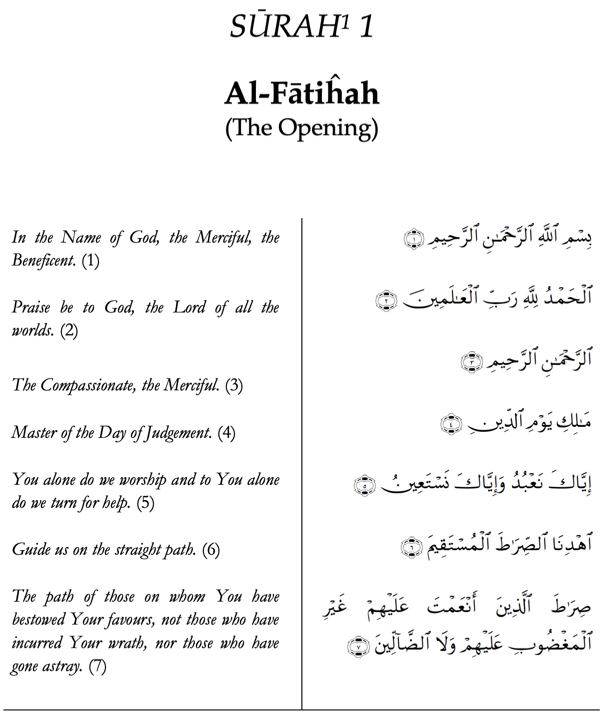
هر مسلمان دا لنډه سورت چې اووه آیتونه لري، لږترلږه اویالس ځله په ورځ کې لولي۔ یوه صحیح حدیث د پیغمبر محمد ﷺ څخه روایت دی چې فرمایي: «هغه لمونځ چې په کې د فاتحې ولوستل نشي، باطل دی۔» دا لنډه سورت د اسلام ډیرې بنسټیزې نظریې، عقیدې او مفکورې په ځان کې راټولې کړې دي۔ دا د اسلام ډیر اساسي تصورات او لیدلوري بیانوي۔ دا ټول دې ته اشاره کوي چې ولې دا سورت دومره ډیر لوستل کیږي او ولې د لمانځه د صحت لپاره ضروري دی۔
Every Muslim recites this short sūrah of seven verses at least seventeen times a day. An authentic ĥadīth of the Prophet Muĥammad (peace be upon him), says: “A prayer by one who does not read the Fātiĥah is invalid.” This short sūrah contains a great deal of the central basic ideas of Islam, its beliefs and concepts. It outlines many of its essential perceptions and attitudes. All this makes it clear why it is chosen for frequent recitation and why it is essential for the validity of prayer.
دې سورت د دې جملې سره پیلیږي:
The sūrah opens with the phrase:
د خدای په نامه چې ډېر مهربان، ډېر رحم کوونکی دی. (آیت ۱)
In the name of God, the Compassionate, the Merciful. (Verse 1)
دېری علماوو دا د سورت یوه مستقله آیت بولي، چې په دې سره د هغې آیتونه اووه ته رسیږي. په دې برخه کې سره اختلاف دی چې ایا دا حکم د قرآن کریم د نورو ټولو سورتونو په اړه هم دی چې په کې همدغه الفاظ د پیل په توګه راغلي دي. ځینې علماء وایي چې الله تعالیٰ د دې خبرې اراده کړې چې: «او تاسو ته مو اوه ډېرې کرځنې لوستل کېدونکې آیتونه او دا عظیم قرآن ورکړی دی.» (۱۵: ۸۷) (الحجر: ۸۷) چې دا آیت د سورة الفاتحہ په اړه دی.
This is recognized by the majority of scholars as a verse of the sūrah, in its own right, completing its verses into seven. There is, however, a difference of opinion over whether this is so with respect to all other sūrahs of the Qur’ān in which the same words appear as the opening phrase. Some scholars maintain that it is to the Fātiĥah that the following Qur’ānic statement refers: “We have given you seven oft- repeated verses and this sublime Qur’ān.” (15: 87)
د قرآن کریم هغه لومړۍ آیتونه چې پیغمبر محمد ﷺ ته نازل شوي، چې په دې الفاظو پیل کیږي: «ولولئ په نوم د خپل رب...» (96: 1)، د هر عمل په پیل کې د خدای نوم یادولو اسلامي ادب ټاکي. دا د اسلام له هغه بنسټیز اصل سره هم سمون لري چې خدای «لومړی او وروستی، ښکاره او پټ» دی. (57: 3) هغه په حقیقت کې ریښتینی موجود، د ټولو موجوداتو سرچینه او د هستۍ موخه دی. له همدې امله هر حرکت او هر عمل د هغه په نوم ترسره کیږي، او هر څه د هغه په نوم پیل کیږي.
The very first verses of the Qur’ān revealed to Prophet Muĥammad, which begin with: “Read in the name of your Lord...” (96: 1) establish the Islamic etiquette of invoking the name of God at the beginning of every action. This is also in line with the fundamental Islamic principle that God is “the first and the last, the outward and the inward.” (57: 3) He is indeed the real being, the origin and the raison d’être of all that exists. In His name, therefore, every movement and action is made, and in His name everything begins.
د ﷲ تعالی صفات الرحمٰن او الرحیم دواړه د رحمت ټول اړخونه او مفهومونه راګډ کوي، او دا دواړه یوازې د ﷲ تعالی په اړه یو ځای کارول کیږي۔ د الرحیم صفت یو انسان ته کارول مناسب دی، خو د اسلامي عقیدې له مخې الرحمٰن کلمه یوازې د ﷲ تعالی لپاره ځانګړې ده۔ د دې پوښتنې په اړه چې له دواړو صفتونو کوم یو د رحمت او مهربانۍ پراخ مفهوم بیانوي، دا زموږ موضوع نه ده۔ خو داسې نتیجه اخیستلی شو چې کله دواړه یو ځای شي، نو د رحمت ټول اړخونه او بڼې راټولوي۔
The divine attributes of the Compassionate, al-Raĥmān, and the Merciful, al-Raĥīm, encompass all aspects and meaning of mercy, and can only be used together with respect to God Almighty. It would be appropriate to use the attribute of al-Raĥīm in reference to a human being, but the Islamic faith requires that use of al-Raĥmān is exclusive to God. As for the debate over which of the two adjectives denotes the wider meaning of mercy and compassion, it does not concern us here. We can conclude, however, that when combined, they encompass all aspects and dimensions of mercy.
څرنګه چې د هر کار په پیل کې د خدای نوم یادول د اسلام د عقیدې لومړی بنسټیز اصل دی، نو د الرحمٰن او الرحیم نومونه یوازې خدای ته ځانګړي کول دویم اصل دی او د خدای او انسان ترمنځ اړیکه ټاکي. کله چې د خدای نوم یاد شي او د هغه بېپایه رحمت ومنل شي، نو انسان ته امر کیږي چې خدای ستاینه وکړي او د ټولو مخلوقاتو په اړه د هغه مطلق واکمني ومني:
As the invocation of God’s name at the beginning of every action constitutes the first fundamental principle of the Muslim faith, the restriction of the use of al-Raĥmān and al-Raĥīm to God alone constitutes the second principle and defines the relationship between God and man. Having invoked God’s name and acknowledged His infinite mercy, one is directed to praise God and recognize His absolute sovereignty over all beings:
الحمد لله رب العالمين۔ (آیت ۲)
Praise be to God, the Lord of all the worlds. (Verse 2)
د خدای ستاینه د مؤمن په زړه کې د خدای د یادولو په وخت کې لومړی احساس دی۔ ځکه د انسان خپل وجود د خدای د لامحدود فضل یوه برخه ده، چې د خدای په وړاندې شکر او ویره زیږوي۔ د خدای د سخا او مهربانۍ څرګندونې انسان او نور مخلوقات احاطه کوي، او هر وخت په هر ځای کې لیدل کیدای شي۔ د هر عمل په پیل او پای کې د خدای ستاینه کول د اسلام عقیدې بله بنسټیزه اصل دی۔ قرآن کریم وايي: «هغه الله دی، له هغه پرته بل معبود نشته۔ د لومړي او وروستي ستاینه هغه ته ده...» (القصص: ۷۰)
Praise of God is the first feeling aroused in a believer’s heart at the mention of God. For man’s own existence is an aspect of God’s infinite grace, which engenders gratitude and reverence towards God. The manifestations of God’s munificence and generosity to man and other creatures abound everywhere and can be seen at every moment. To praise God at the beginning and at the end of every action is another fundamental principle of the Islamic faith. The Qur’ān says: “He is God; there is no deity but He. To Him belongs praise in the first and in the last...” (28: 70)
سره له دې، د خدای فضل داسې دی چې کله یو مؤمن ووایي "الحمدلله"، دا د هغه لپاره د یوه نیک عمل په توګه ثبتېږي چې له هرڅه زیات وزن لري. د پیغمبر ﷺ صحابي عمر بن الخطاب روایت کوي چې پیغمبر ﷺ داسې وویل: یو سړي وویل، "ای ربه، زه تا داسې ستاینه کوم لکه څنګه چې ستا د مخ عظمت او ستا د قدرت لوی والی دا غوښتنه کوي." هغه دوه ملائکې چې دې سړي سره وې، د دې خبرې ارزښت نه شو پېژندلی او د خدای جل جلاله ته مراجعه وکړه، چې هغه دوی ته امر وکړ: "دا د هغه په دفتر کې هماغسې ولیکئ لکه څنګه چې هغه وویل، او کله چې هغه زما ته راستون شي، زه به هغه ته هغسې بدله ورکړم لکه څنګه چې هغه مستحق دی."
د دې آیت وروستۍ برخه، "د ټولو عالمینو رب"، د هغه بېشریکه او نړیواله الوهیت باور څرګندوي چې د اسلامي تصور د خدای په مرکز کې دی. خدای یوازینی، مطلق او وروستی مالک دی چې د ټول کائنات په اړه بشپړ او خپلواک واک لري. هغه هغه لوی واکمن دی چې نړۍ یې پیدا کړې، او تل یې ساتي، پاملرنه کوي، او ثبات او بهبود یې تضمینوي. د خالق او مخلوق دا ژوندی او متحرک اړیکه د ټولو مخلوقاتو د ژوند د نه ختمیدونکې چینې په توګه ده. خدای نړۍ پیدا کړې او په خپلو وسایلو باندې یې نه ده پریښې. هغه د خپل مخلوق باندې فعال ژوندی واک ساتي، او هغه ته هغه څه ورکوي چې د هغه د دوام او معنیلرونکي ژوند لپاره ورته اړین دي. دا حکم د خدای د ټولو مخلوقاتو په اړه پلي کیږي.
Nevertheless, God’s grace is such that when a believer says, ‘praise be to God,’ it is recorded for him as a good deed outweighing everything. `Umar ibn al-Khaţţāb, the Prophet’s Companion, relates that the Prophet (peace be upon him) told how a man once said, “Lord, I praise You as befits the majesty of Your face and the greatness of Your power.” The two angels accompanying that man could not evaluate the remark and referred to God Almighty, who commanded them: “Register it in his record as he said it, and I shall reward him as he deserves when he returns to Me.” The last part of this verse, “Lord of all the worlds”, expresses the belief in absolute universal Godhead which is at the very core of the Islamic concept of God. God is the sole, absolute and ultimate owner with full independent authority to act in the whole cosmos. He is the overall supreme master who has created the world and continues to watch over it, take care of it, and ensure its stability and well-being. This living and dynamic relationship between the Creator and the created is the perpetual fountain of life for all creation. God has not created the world and abandoned it to its own devices. He continues to be an active living authority over His creation, giving it what it needs for its continued and meaningful life. This applies to all God’s creation.
د خدای مطلق ربوبیت منل د دې خبرې څرګندول چې هغه یوازینی خالق دی، د هغه د یووالي په اړه د روښانتیا او ګډوډۍ ترمنځ توپیر رامینځته کوي. خلک اکثراً د خدای د یوازینی خالق په توګه منلو سره په خپل ژوند کې د ډیرو داسې معبودانو د واک منلو عقیده هم ساتي چې گواکې اختیار لري. دا ښایي بې بنسټه بریښي چې خلک داسې عقیده ولري، مګر دا په تیرو زمانو کې هم همداسې وه او نن هم همداسې ده. قرآن کریم د هغو کسانو خبره کوي چې وایي: «موږ دوی (کوچني معبودان) یوازې دې لپاره عبادت کوو چې موږ د خدای سره نږدې کړي.» (الزمر: 3) همدارنګه ياد کوي چې ځینې يهودي او عیسوي ډلې «خپل احبار او راهبان د خدای پرځای خدایان نیولي دي.» (التوبه: 31) شرک، يعنې د ډیرو معبودانو یا نیمه خدایانو عبادت، چې د «لوی خدای» تر څنګ ګڼل کېدل، په اوومه پېړۍ کې چې اسلام په عربستان کې راڅرګند شو، ډېر عام و.
Acknowledging God’s absolute Lordship makes all the difference between clarity and confusion with regard to God’s absolute oneness. People often combined their acknowledgement of God as the sole creator with belief in multiple deities having authority in their life. It may seem absurd that people should ever hold such a belief, but this was true in the past and is still true today. The Qur’ān speaks of those who claim that they “only worship them [minor gods] so that they may bring us nearer to God.“ (39: 3) It also mentions that some Jewish and Christian groups who “have taken their rabbis and priests as gods alongside God.” (9: 31) Polytheism, or the worship of several deities or demigods besides the perceived ‘Grand Deity’, was widespread when Islam emerged in the 7th century in Arabia.
د یوې خدای مطلق واکمنۍ او فعال اقتدار تائید.
The affirmation of the absolute sovereignty and active authority of the One God.
د انسان د عقلانیت او زړه د سکون د تضمین لپاره، او د شرک د ظالمانه حیرانتیا څخه د هغه د ازادولو لپاره، دا ضروري وه چې ټول مخلوق پر خپل ځای وي. انسان باید په دې باور وي چې یو ساتونکی او مهربان خدای دا دنیا اداره کوي، او هیڅکله به یې نه پریږدي او نه به یې هیروي.
over all creation was necessary to ensure man’s rationality and peace of mind, and to relieve him from the cruel bewilderment of polytheism. Man must be reassured that a vigilant and caring God is in charge of this world and will never abandon or forsake it.
په اسلام کے ظہور کے وقت دنیا غلط عقیدو اور فلسفو سے بھری ہوئی تھی، اور ان جھوٹے مذہبوں سے بھری ہوئی تھی جن کی بنیاد توہم پرستی، قصے کہانیوں اور دیومالا پر تھی۔ ان میں بہت کم باتیں سچی یا حتیٰ کہ عقلی تھیں۔ جہاں تک خدا کے تصور اور اس کے انسان و کائنات کے ساتھ تعلق کا سوال تھا، وہاں بڑی حد تک افسوسناک الجھاؤ پایا جاتا تھا۔ اور اس کا نتیجہ یہ نکلا کہ خود انسان کی کائنات کے بارے میں سمجھ اور اس کے اپنے مقام و کردار کے بارے میں فہم بھی الجھن کا شکار ہو گیا۔
At the advent of Islam, the world was full of erroneous beliefs and philosophies, and of false religions based on superstition, legend and mythology. Very little of it was true or even rational. As far as the concept of God and His relationship with man and the world was concerned, there was plenty of miserable confusion. This in turn led to confusion in man’s understanding of the world and of his own position and role within it.
هغه اړتیا چې یو منطقي، واضح او منسجم عقیدوي نظام ولري، یوازې هغه تیارو دورو ته په کتو ښکاره کیږي چې په انساني تاریخ کې دا ډول نظام نه و. نو انسان پوهیږي چې دا لوی افسانې او غلطې عقیدې څومره درنه باري انسان باندې اچوي. په دې اړه به نور هم وروسته هغه مهالړ کې خبرې وشي چې موږ د قرآن کریم د ځانګړو مثالونو مطالعې ته ورځو.
The need for a rational, clear and consistent system of beliefs only becomes apparent when we study those dark periods of human history when there was no such system. We then realize how heavily such great myth and false beliefs weigh on man. There will be more on this when we come to study specific instances in the Qur’ān.
د داسې اړتیا په رڼا کې اسلام د انسان عقیدې سمولو ته ډیر پام کړی او د خدای د مفهوم او ماهیت، د هغه صفتونو، او د پیدا کوونکي او مخلوق ترمنځ اړیکې ډیر روښانه طور تعریف کړي دي.
It is in the light of such need that Islam has taken great care to correct man’s beliefs and define very clearly the concept and nature of God and His attributes, and the relationship between Creator and creation.
دا د خدای د یووالي اسلامي مفهوم کې څرګندیږي، چې د اسلام جوهر او تر ټولو بنسټیز اصل دی. د دې ټینګولو او روښانه کولو لپاره، چې خدای یو دی، مطلق او ماوراء الطبیعي ربّ او د ټولو موجوداتو مالک دی، ډېر پاملرنه شوې ده. د دې مفهوم بل اړخ چې اسلام ورته تر ټولو ډېره پاملرنه کړې ده، د خدای د صفاتو تعریف دی، کوم چې په تېرو زمانو کې د ډېرو ګډوډیو، پټو خبرو او ناسم مذهبي او فلسفي فکر سبب شوی دی.
This is embodied in the Islamic concept of God’s oneness, the essence and most fundamental principle of Islam. Much care has been devoted to establishing and elucidating the affirmation that God is the One, absolute and transcendent Lord and Master of all that exists. The other aspect of this concept to which Islam has given its greatest attention is the definition of God’s attributes, which has been the cause of much confusion, obfuscation and muddled religious and philosophical thinking through the ages.
د خدای وحدانیت او د هغې سره تړلو ټولو موضوعاتو ته اسلام چې کومه شدت، ټینګار او تفصیل ورکړی، هغه یوازې د هغو ډیرو تیروتنو او ګډوډو عقیدو په شا منظر کې ښه درک کیدای شي چې په تاریخ کې راټولې شوې وې. له همدې نظره اسلام په آسانۍ سره د انسانیت لپاره د خدای د رحمت یوه ژورې او وخت پوره کړونکې ډالۍ په توګه لیدل کیدای شي، رحمت چې په ښکلا، سادګۍ، روښانتیا، ترمنځ همغږۍ او د انساني فطرت سره په بشپړ مطابقت ورکول کیږي۔
The intensity, emphasis and detail with which Islam has dealt with the concept of God’s oneness, and all subjects related to it, can only be appreciated against the background of the great mass of erroneous beliefs and confused theologies that had accumulated in the course of history. From this perspective, Islam can readily be seen as a profound and timely act of divine mercy bestowed on humanity — mercy that is given with beauty, simplicity, clarity, harmony and full accordance with human nature.
د ډېر مهربان، ډېر رحم کوونکي (الله) په نامه. (آیت ۳)
The Compassionate, the Merciful. (Verse 3)
دا دوه صفتونه دي چې د رحمت او مهربانۍ ټول معناوې او اړخونه پکې راغلي دي، او د الله تعالیٰ د رحمت د صفت خلاصه بیانوي. دا دوه صفتونه د خالق رب او د هغه د مخلوق ترمنځ اړیکه څرګندوي. دا اړیکه په بشپړه توګه په مینه، سوله، ډاډ او پاملرنې ولاړه ده، او د انسان په زړه کې د خدای تعالیٰ په وړاندې د شکر او ستاینې بې ساخته احساس پیدا کوي.
These are two attributes that encompass all meanings and aspects of mercy and compassion, and epitomize mercy as a property of God Almighty. These two attributes define the link between the Lord as Creator and His creation. It is a link based entirely on love, peace, reassurance and care, and which inspires within man a spontaneous feeling of gratitude and praise towards God.
په یوناني اساطیرو یا د زاړه عهد نامې (پیدایښت، ۴: ۱۱–۱۲) برعکس، اسلام خدای دا داسې نه بیانوي چې د انسان په تعقیب یې بې رحمه انتقام اخلي، یا په کینې او بدخواهۍ سره د خپلې مخلوق په وړاندې پلانونه او توطیې جوړوي۔
Unlike Greek mythology or the Old Testament (Genesis, 4: 1112), Islam does not depict God as an enemy who pursues man with relentless vengeance, or plots and schemes against His creation with spite and vindictiveness.
د قیامت د ورځې مالک۔ (آیت ۴)
Master of the Day of Judgement. (Verse 4)
دا آیت د اسلامي یوه بنسټیز اصل بیانوي چې د انسان په ژوند باندې ژور اغېز لري: د آخرت باور. قرآن کریم د دې عجیبې خبرې څرګندونه کوي چې خلک ډېر وخت خدای د پیدا کوونکي په توګه منلی دی، خو د قیامت ورځې، د راتلونکي ژوند باور یې نه دی کړی، هغه ورځ چې اجر او سزا ورکول کېږي او د عدل توازن بېرته قایموي. د همدې خلکو په اړه قرآن کریم فرمایي: «که تاسو له دوی وپوښتئ چې آسمانونه او ځمکه چا پیدا کړي دي؟ نو خامخا به وایي، الله.» (۳۱: ۲۵)۔ نور ځای قرآن کریم د دې ډول خلکو په اړه فرمایي: «دوی حیران شوي چې له خپل منځ څخه یو ویروونکی وروسته دوی ته راغلی دی. نو کافران وایي، دا خو ډېره عجیبه خبره ده! ایا کله چې مړه شو او خاوره شو [بیا به راژوندي کېږو]؟ دا خو ډېره لرې بیرته راستنېدل دي!» (۵۰: ۲-۳)
This verse states a fundamental Islamic principle that has a most profound influence on human life: belief in the hereafter. The Qur’ān comments on the curious fact that people have often believed in God as Creator but have failed to believe in a Day of Judgement, in a life to come, when reward and punishment are meted out to restore the balance of justice. It is in reference to these that the Qur’ān says: “If you ask them, ‘Who is it that created the heavens and the earth?’ they will surely answer, ‘God’” (31: 25) Elsewhere the Qur’ān says of such people: “They deem it strange that a warner should have come to them from their own midst. Thus, the unbelievers say, A strange thing is this! [Are we to be resurrected] after we have died and become mere dust? Such a return seems far-fetched indeed!’“ (50: 2-3)
د آخرت پر ایمان لرل ضروري دي، ځکه دا د انسان روح او ذهن ته لاره ورکوي او د انسان توجه یوې راتلونکې ژوند ته متمرکزه کوي. دا بیا د انسان د دې دنیا د ژوند پر لیوالتیا باندې مهار اچوي، او د هغه د فوري دنیوي خواهشاتو څخه د تېرېدو وړ کوي. هغه نور د ټول اجر همدلته او اوس تر لاسه کولو ته اندېښمن نه وي؛ هغه کولای شي خپل خودغرضي له منځه یوسي او د نورو ته د ګټې او خیر غوښتنې احساسات او علاقې پرمخ وړي. انسان کولای شي چې ژوند د هڅونکي، زغم لرونکي، باوري او خوشبین وجود په توګه تېر کړي۔
Belief in the hereafter is essential because it engages the human soul and mind and concentrates man’s attention on a future existence. This in turn helps to rein in man’s obsession with the present life, and to transcend his immediate earthly desires. He is no longer anxious to reap all his rewards here and now; he can conquer his selfishness and develop altruistic feelings and interests. Man is able to go through life as a motivated, tolerant, confident and optimistic being.
دا مرکزي اسلامي عقیده د هغه اخلاقي او فکري ازادۍ د ترلاسه کولو د هڅې او د دنیوي او خودغرضانه خواهشاتو او خوښیو په وړاندې تسلیم کیدو ترمنځ روښانه توپیر کوي، کوم ازادي چې انسان ته اړتیا لري او مستحق دی. دا د یو متوازن او وجدان لرونکي انسانیت او د ځان غوښتونکي او خودغرض انسانیت ترمنځ توپیر ښیي.
This central Islamic belief distinguishes clearly between aspiring to gain the moral and intellectual freedom that man needs and deserves, and capitulation to worldly and selfish desires and pleasures. It marks the difference between a well-balanced and conscientious humanity and an egotistic, self-seeking one.
انساني ژوند هيڅکله متوازن او عادلانه نشي کېدای تر هغې پورې چې خلک په دې باور ونه کړي چې هغه څه چې دوی په دې لنډ ژوند کې ترلاسه کوي، دا ټول شی او وروستی هدف نه دی. انسان ته د يوه پخ باور ډز تحریک ته اړتيا ده چې يو بل ژوند هغه ته انتظار کوي، چې د هغه هڅو، قربانيو او زيار ارزښت لري چې هغه ممکن په دې لنډ ژوند کې ورته اړ شي. دا باور د هغو کسانو په احساساتو، رويو او چلند کې بنيادي توپير راولي چې دا عقيده ساتي.
Human life can never be balanced and equitable until people believe that what they earn in this transient life is not the be-all and the end- all. Man needs to have the incentive of a confident belief that another life awaits him, which is worth the struggle and the sacrifices and the effort he may have to make here in this short one. This belief brings a fundamental difference in the feelings, attitudes and behaviour of those who uphold it.
یوازې تا عبادت کوو او یوازې له تا مرسته غواړو۔ (آیت ۵)
You alone do we worship and to You alone do we turn for help. (Verse 5)
دا آیت یو بل بنسټیز اصل بیانوي چې د مخکینیو اصولو څخه په منطقي توګه رالاندې کیږي. دا یو پریکړه کوونکی او مهم اصل هم دی چې هغه آزادي چې انسان د خدای په تسلیمیدو کې ترلاسه کوي، او هغه ټیټونکی او ظلم چې د انسان د انسان په بندګۍ کې شتون لري، یو له بل څخه جلا کوي.
This verse expresses another fundamental principle that follows logically from the preceding ones. It is also a decisive and crucial principle that draws a line between the freedom man gains in submitting to God and the abuse and debasement implicit in man’s servitude to man.
کله چې انسان خپل ځان خدای ته تسلیم کړي او یوازې له هغه څخه مرسته او لارښوونه وغواړي، نو هغه د ټولو مذهبي، فکري، اخلاقي او سیاسي واکمنیو له ظلم څخه بشپړ آزادي ترلاسه کړې ده۔
Once man has submitted himself to God and sought help and guidance from Him alone, he has achieved total liberation from the tyranny of all religious, intellectual, moral and political powers.
په مؤمن مسلمان باندې انساني واک دوه ډوله دی: یو هغه واک چې په سمه لار روان وي، خدای پېژني او د هغه لارښوونو سره سم عمل کوي، او بل هغه سرکښ او یاغی واک چې د خدای حاکمیت او قدرت نه منې. یو مسلمان ته لازمه ده چې په لومړي ډول واک ملاتړ او تایید وکړي، پرېکړه ډېر کمزوری یا بې وسې شوی وي، او د دوهم ډول واک نه انکار وکړي او مخالفت یې وکړي، پرېکړه چې هغه څومره زورور یا غالب وي. قرآن کریم فرمایي: {كَم مِّن فِئَةٍ قَلِيلَةٍ غَلَبَتْ فِئَةً كَثِيرَةً بِإِذْنِ اللَّهِ} [البقرہ: ۲۴۹] د ظاهراً کمزورې ډلې داسې بریالیتوب یوازې هغه وخت ترلاسه کېدای شي کله چې هغه د ټولو قدرتونو سرچینې خدای ته تکیه وکړي.
To the believer in Islam, human power falls into two categories: a rightly-guided power that recognizes God and abides by His directions, and an arrogant, rebellious one that does not admit to God’s sovereignty and authority. A Muslim is required to support and endorse the former, no matter how weak or disadvantaged it may be, and to reject and oppose the latter, regardless of its strength or dominance. The Qur’ān says: “Many a small band, by the grace of God, has vanquished a large one.” (2: 249) Such victory of the apparently weaker host could only be achieved when it relies on God, the source of all power.
د طبیعي قوتونو په اړه، د یوه مسلمان رویه د ویرې یا دښمنۍ پر ځای د تجسس او دوستۍ ده. د انسان قوتونه او د طبیعت قوتونه د خدای د خپل قدرت د بېساخته اغیزو په توګه لیدل کیږي، او د هغه د اراده تابع دي. له همدې امله، دا دواړه په بشپړ ډول یو بل ته مرسته کوونکي او یو پر بل تکیه لرونکي دي.
Towards natural forces, a Muslim’s attitude is one of curiosity and friendliness rather than fear or hostility. The powers of man and the powers of nature are perceived as by-products of God’s own power, and subject to His will. They are, therefore, perfectly complementary and interdependent.
اسلام دا تعلیم ورکوي چې خدای تعالی فزیکي نړۍ او د هغې ټول ځواکونه د انسان د خپل ځان د استفادې او ګټې لپاره پیدا کړي دي. انسان ته په ځانګړي ډول دا لارښوونه او حکم ورکړل شوی دی چې شاوخوا نړۍ مطالعه کړي، د هغې پوتنشیل ومومي او خپل ټول چاپیریال د خپل ځان او د خپلو نورو همنوعو د ښېګڼې لپاره وکاروي. هغه زیان چې انسان د طبیعت له لاسه تاوانېږي، یوازې د هغې او د هغې د قوانینو په اړه د انسان د ناپوهۍ یا د پوهې د نشتوالي له امله دی. څومره چې انسان د طبیعت په اړه زیات زده کوي، هغومره د طبیعت او چاپیریال سره د هغه اړیکې سولهییزې او متوازنې کېږي.
Islam teaches that God has created the physical world and all its forces for man’s own use and benefit. Man is specifically taught and directed to study the world around him, discover its potential and utilize all his environment for his own good and the good of his fellow humans. Any harm that man suffers at the hands of nature is a result only of his ignorance or lack of understanding of it and of the laws governing it. The more man learns about nature, the more peaceful and harmonious his relationship with nature and the environment.
له همدې امله د "طبیعت فتح کول" مفهوم په اسانۍ سره منفي او بدبینانه ښکاري. دا مفهوم د اسلامي تصورونو سره بېګانه دی او د هغې روح او هغې الهي حکمت څخه چې د نړۍ د پیدایښت لامل شوی، بې شرمه ناخبرتیا ښیي.
Hence the notion of “conquering nature” can readily be seen as cynical and negative. It is alien to Islamic perceptions and betrays a shameless ignorance of the spirit in which the world has been created and the divine wisdom that underlies it.
په دې پوهه چې خدای د دنیا په ټاکلو او چلولو کې لاس او رول لري، مسلمانان د انسان او طبیعت په اړیکو کې مثبته، دوستانه او سازنده لید لري. په ساده ټکو کې، دا دې حقیقت ته اقرار کوي چې خدای د دغو ټولو قوتونو سرچینه او پیدا کوونکی دی، د ورته اصولو او قوانینو پر بنسټ. دوی داسې ډیزاین شوي چې په یوځای، د یوې ګډې موخې لپاره، په هم آهنګۍ، مطابقت او متقابل ملاتړ کې کار وکړي. د طبیعت قوتونه په اصل کې انسان ته تابع دي، څوک چې په ذهني او فزیکي لحاظ دا وړتیا لري چې دوی وپیژني، پټ رازونه یې حل کړي، هغه قوانین ورڅخه پوه شي چې دوی یې اداره کوي، او بیا د دوی څخه د ګټې اخیستو لپاره وسایل جوړ کړي، ترڅو د مځکې پر مخ د ژوند کیفیت ښه کړي. قرآن کریم وایي: «هغه ستاسو لپاره هغه هر څه تابع کړي دي چې په ځمکه کې دي.» (۴۵:۱۳)
Being always aware of God’s hand and role in shaping and running the world, Muslims have a positive, friendly and constructive outlook on man’s relationship with nature. Simply stated, it acknowledges God as the origin and Creator of all these forces, on the basis of the same set of axioms and laws. They are designed to function together, for a common purpose, in harmony, compatibility and mutual support. The forces of nature are essentially subservient to man, who is mentally and physically equipped to discern them, unravel their secrets, comprehend the laws governing them and, subsequently, to harness them to improve the quality of life on earth. The Qur’ān asserts: “He has all that is on the earth subservient to you.” (45: 13)
دې ډول نظر هرډول ویره او انزوا له منځه وړي او دا احساس پیدا کوي چې انسان یوازې د نړۍ د عمومي ډیزاین یوه ځانګړې برخه نه ده، بلکې یو له مخې اغیزمن او اغیزه لرونکی وجود هم دی. په دې ترتیب سره د هغه نړۍ دوستانه کیږي. دا مطلب په ډیر ښه ډول د پیغمبر ﷺ هغه قول څرګندوي چې کله یې د احد غره ته مخ کړ، هغه ځای چې مسلمانانو کې یې سخته ماتې وخوړه، او وې فرمایل: «موږ دا غر ډیر خوښوو، او دا هم موږ خوښوي!» دا جمله په لنډ ډول هغه ژور اړیکه څرګندوي چې پیغمبر ﷺ د طبیعت سره، حتی د هغې په ترټ او سخت شکلونو کې هم، درلوده.
Such an outlook eliminates all traces of fear or isolation and allows, instead, a profound sense of belonging in which man is seen not only as an integral part of the overall design of the world, but also an essentially effective and influential one. Thus, his world becomes a friendly one. This is best expressed by the Prophet when he once faced Mount Uĥud, the scene of a bitter defeat for Muslims, and said, “How we love this mountain, and how it loves us!” This expresses in a nutshell the affinity the Prophet felt towards nature even in its most rugged forms.
له دې بنسټیزو اصولو په بیانولو سره، سورت د دې اصولو سره د مقابلې په ځینو عملي لارو رهنمایي کوي، چې ترټولو مهمه یې لمونځ دی:
Having established these fundamental principles, the sūrah points the way to certain practical means of responding to them, foremost among which is prayer:
موږ ته سمه لار وښایه؛ د هغو کسانو لاره چې ته پرې انعام کړی، نه د هغو چې غضب پرې شوی، او نه د هغو چې ګمراه شوي دي۔ (د سورۃ الفاتحہ، آیتونه ۶-۷)
Guide us on the straight path; the path of those on whom You have bestowed Your favours, not those who have incurred Your wrath, nor those who have gone astray. (Verses 6-7)
په دې الفاظو کې یو مومن دا غوښتنه کوي چې هغه ته سمه لاره وښودل شي او په هغې کې مرسته ورسره وشي، او دا کار د خدای د لارښوونې، پاملرنې او رحمت پرته نه کیږي. دا اعتراف کول پخپله د خدای د حاکمیت او د ټولو شیانو او پېښو په ټولو اختیار د منلو معنا لري.
With these words a believer pleads to be shown the Right Way and to be helped along it, which cannot be achieved without God’s guidance, care and mercy. To acknowledge that is in itself a recognition of God’s sovereignty and dominance over all things and events.
د صحیح لارې ته هدایت د انسان لپاره دا ضمانت کوي چې په دې دنیا او په آخرت کې خوشحاله اوسي. دا په حقیقت کې د انسان د فطرت، د هغه د غریزو، خواهشونو او الهامونو د لارښوونې له لارې رامینځ ته کیږي، چې دوی د خداي ﷻ د اراده پیژندلو او پوهیدو ته متوجه کړي، او په دې ډول د انسان فعالیت د طبیعي نظم او فزیکي نړۍ سره په ریتم کې راولي.
Guidance to the right way of life guarantees man’s happiness in this world and in the hereafter. It comes about, in effect, by guiding human nature and man’s instincts, desires and inspirations towards the recognition and comprehension of the divine will, so bringing human activity into rhythm with the natural order and the physical world.
دا سورت «صراط مستقیم» داسې بیانوي چې دا هغه لاره ده چې الله تعالیٰ یې پر هغو انعام کړی دی، نه د هغو کسانو لاره چې د حق څخه د انحراف په سبب د الله تعالیٰ غضب ته مستحق شوي، او نه د هغو غافلانو لاره چې د حق پوهه نه لري. دا د خوښۍ او نجات لاره ده۔
The sūrah reveals the nature of the “straight path” as being one taken by those whom God has favoured, not the way of those who have earned His displeasure by their deviation from the Truth, nor that of the heedless who have no knowledge of the truth. It is the path of happiness and salvation.
دا هغه سورت دی چې الفاتحه نومېږي، هغه سورت چې په ورځنۍ توګه د ډېر تلاوت لپاره غوره شوی، او د هغې پرته اسلامي لمونځ باطل دی. د دې لنډوالي سره سره، دا د اسلام د عقیدې ځینې تر ټولو بنسټیز اصولونه او له هغو څخه راوتلي ځینې پوهې په ځان کې لري.
This, then, is al-Fātiĥah, the sūrah selected for frequent daily recitation, without which Islamic prayers are invalid. Despite its brevity, it contains some of the most fundamental principles of the Islamic faith and certain insights that arise from them.
پیغمبر محمد ﷺ څخه په باور وړ ډول روایت دی چې هغه د خدای له خولې نقل کړی چې: د لمانځه ثمرې زما او زما د بنده ترمنځ په برابره توګه ویشل شوې دي، او زما بنده هغه څه ترلاسه کوي چې غواړي. کله چې عبادت کوونکی [په لمانځه کې] وایي: «ستاینه د خدای لپاره ده چې د ټولو عالمونو ربّ دی»، خدای وایي: زما بنده ما ستایلی دی. کله چې وایي: «ډیر مهربان، ډیر رحم کوونکی»، خدای وایي: زما بنده زما شکر ادا کړی دی. کله چې وایي: «د قیامت د ورځې مالک»، خدای وایي: «زما بنده ما لوی ګڼلی دی». کله چې وایي: «یوازې تا ته عبادت کوو، او یوازې له تا څخه مرسته غواړو»، خدای وایي: «دا زما او زما د بنده ترمنځ دی، او زما بنده هغه څه ترلاسه کوي چې غواړي». او کله چې وایي: «موږ ته سمه لاره وښایه، د هغو کسانو لاره چې ته یې پر دوی انعام کړی، نه د هغو چې غضب شوي او نه د هغو چې ګمراه شوي»، خدای وایي: «دا زما د بنده لپاره دی، او هغه به خپله غوښتنه ترلاسه کړي».
دا حدیث د سورې الفاتحې ځینې معناګانې روښانه کوي. لوستونکي به شاید دا ګټور وګڼي ترڅو پوه شي چې ولې خدای دا سورت د مسلمانانو لخوا د ورځې او شپې په لړ کې د فرضو لمونځونو کې، کله چې ولاړ وي، لږ تر لږه اوه لس ځله، او له هغو څخه هم ډیر کله، د نفل لمونځونو کې لوستل ټاکلي دي.
The Prophet Muĥammad is reliably reported to have quoted God as saying that the fruits of prayer are shared equally between Me and My servant, and My servant will be granted what he asks for. As the worshipper recites [in Prayer]: “Praise be to God, the Lord of all the worlds,” God will say: ‘My servant has praised Me.’ As he recites: “The Compassionate, the Merciful,” God will say: ‘My servant has thanked Me.’ As he recites: “Master of the Day of Judgement,” God will say: “My servant has glorified Me.” As he says: “You alone do we worship, and to You alone do we turn for help,” God will say: ‘This is between Me and My servant, and My servant will receive what he asks for.’ And, as he says: “Guide us on the straight path, the path of those on whom You have bestowed Your favours, not those who have incurred Your wrath, nor those who have gone astray,” God will say: ‘This is for My servant, and he will be granted his wish.’“ This ĥadīth explores some of the meanings of al-Fātiĥah. The reader will perhaps find it helpful in understanding why God has chosen this sūrah for recitation by Muslims at least seventeen times a day, as they stand up for their obligatory prayers, spread over the night and day, and even more frequently, whenever they offer voluntary prayers.