আল-ফাতিহাহ (উদ্বোধন)
Al-Fatihah (The Opening)
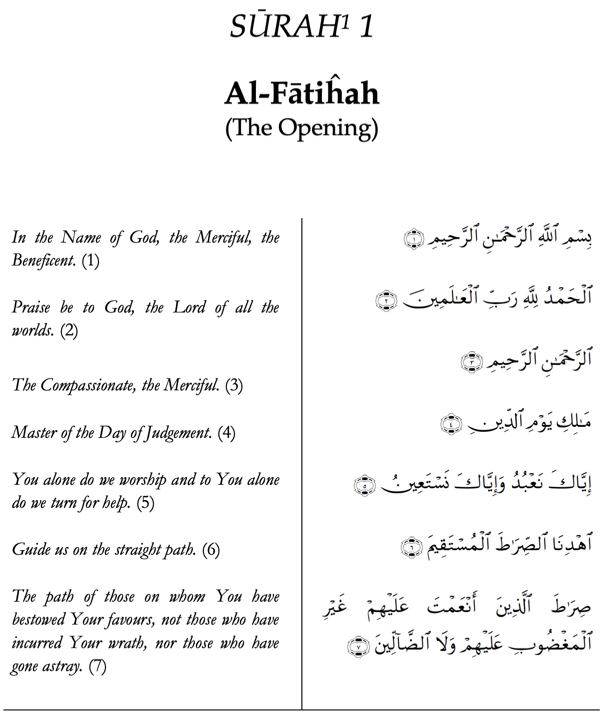
পরম করুণাময় ও অসীম দয়ালু আল্লাহর নামে। (১)
In the Name of God, the Merciful, the Beneficent. (1)
সকল প্রশংসা আল্লাহর জন্য, যিনি সমগ্র জগতের প্রতিপালক। (২) Note: per the rules, the word for God should not be "Allah"; I should instead use the Bengali word for God, which is "ঈশ্বর". Corrected translation: সকল প্রশংসা ঈশ্বরের জন্য, যিনি সমগ্র জগতের প্রতিপালক। (২)
Praise be to God, the Lord of all the worlds. (2)
পরম করুণাময়, অতি দয়ালু। (৩) বিচার দিবসের মালিক। (৪)
The Compassionate, the Merciful. (3) Master of the Day of Judgement. (4)
আমরা শুধু আপনারই ইবাদত করি এবং শুধু আপনারই কাছে সাহায্য প্রার্থনা করি। (৫)
You alone do we worship and to You alone do we turn for help. (5)
আমাদেরকে সরল পথে পরিচালিত করুন। (৬)
Guide us on the straight path. (6)
আপনি যাদের প্রতি অনুগ্রহ করেছেন তাদের পথ, যাদের উপর আপনার ক্রোধ নিপতিত হয়েছে তাদের পথ নয়, এবং যারা পথভ্রষ্ট হয়েছে তাদের পথও নয়। (৭)
The path of those on whom You have bestowed Your favours, not those who have incurred Your wrath, nor those who have gone astray. (7)
ওভারভিউ
Overview
সূরাহ হলো কুরআনের একটি অংশের নাম। ইংরেজিতে এর নিকটতম শব্দ হলো ‘chapter’ (অধ্যায়), কিন্তু যেহেতু আরবিতে ‘সূরাহ’ শব্দটি শুধুমাত্র কুরআনের অংশগুলোর জন্য ব্যবহৃত হয়, তাই ইংরেজিতেও একে ‘sūrah’ হিসেবে রাখা হয়েছে। কুরআনে ১১৪টি সূরাহ রয়েছে, যেগুলোর দৈর্ঘ্য বিভিন্ন রকমের।
1 Sūrah is the name of a unit of the Qur’ān. The nearest English word is ‘chapter’, but since sūrah’ is used in Arabic to denote only units of the Qur’ān, it has been retained in English. The Qur’ān has 114 sūrahs of varying length.
প্রতিটি মুসলিম এই ছোট সূরাটি, যাতে সাতটি আয়াত রয়েছে, দিনে অন্তত সতেরো বার পাঠ করে। নবী মুহাম্মাদ ﷺ-এর একটি সহীহ হাদীস বলে: “যে ব্যক্তি ফাতিহা পাঠ করে না, তার সালাত বাতিল।” এই ছোট সূরায় ইসলামের মৌলিক ধারণা, বিশ্বাস ও নীতির অনেক কেন্দ্রীয় বিষয় রয়েছে। এতে ইসলামের অপরিহার্য ধারণা ও মনোভাবের অনেক কিছুর রূপরেখা দেওয়া হয়েছে। এসব কারণে এটিকে বারবার পাঠের জন্য বেছে নেওয়া হয়েছে এবং সালাতের বৈধতার জন্য এটি অপরিহার্য, তা স্পষ্ট হয়।
Every Muslim recites this short sūrah of seven verses at least seventeen times a day. An authentic ĥadīth of the Prophet Muĥammad (peace be upon him), says: “A prayer by one who does not read the Fātiĥah is invalid.” This short sūrah contains a great deal of the central basic ideas of Islam, its beliefs and concepts. It outlines many of its essential perceptions and attitudes. All this makes it clear why it is chosen for frequent recitation and why it is essential for the validity of prayer.
সূরাটি এই বাক্যাংশ দিয়ে শুরু হয়:
The sūrah opens with the phrase:
পরম করুণাময়, অসীম দয়ালু আল্লাহর নামে। (আয়াত ১)
In the name of God, the Compassionate, the Merciful. (Verse 1)
এটিকে অধিকাংশ আলেম সূরার একটি স্বতন্ত্র আয়াত হিসেবে স্বীকার করেন, যা সূরার আয়াতসংখ্যাকে সাতে পূর্ণ করে। তবে অন্যান্য যেসব সূরায় একই শব্দাবলি শুরুর বাক্যাংশরূপে এসেছে, সেগুলোর ক্ষেত্রেও এটি একই রকম কি না, সে বিষয়ে আলেমদের মতভেদ রয়েছে। কেউ কেউ মনে করেন, নিম্নোক্ত কুরআনি বক্তব্যটি সূরা ফাতিহাকে উদ্দেশ্য করে: “আমি আপনাকে দিয়েছি সাতটি বারবার পঠিত আয়াত এবং এই মহান কুরআন।” (১৫: ৮৭)
This is recognized by the majority of scholars as a verse of the sūrah, in its own right, completing its verses into seven. There is, however, a difference of opinion over whether this is so with respect to all other sūrahs of the Qur’ān in which the same words appear as the opening phrase. Some scholars maintain that it is to the Fātiĥah that the following Qur’ānic statement refers: “We have given you seven oft- repeated verses and this sublime Qur’ān.” (15: 87)
প্রথম যে আয়াতগুলো নবী মুহাম্মাদ ﷺ-এর উপর অবতীর্ণ হয়েছিল, যেগুলো শুরু হয়েছে “পড়ো তোমার রবের নামে...” (৯৬: ১) দিয়ে, সেগুলো প্রতিটি কাজের শুরুতে আল্লাহর নাম উচ্চারণের ইসলামী শিষ্টাচার প্রতিষ্ঠা করে। এটি ইসলামের এই মৌলিক নীতির সঙ্গেও সামঞ্জস্যপূর্ণ যে, আল্লাহ হলেন “প্রথম ও শেষ, প্রকাশ্য ও গোপন।” (৫৭: ৩) প্রকৃতপক্ষে তিনিই সত্য সত্তা, সৃষ্ট সবকিছুর উৎস ও অস্তিত্বের কারণ। অতএব, তাঁরই নামে প্রতিটি গতি ও কর্ম সম্পাদিত হয়, এবং তাঁরই নামে সবকিছু শুরু হয়।
The very first verses of the Qur’ān revealed to Prophet Muĥammad, which begin with: “Read in the name of your Lord...” (96: 1) establish the Islamic etiquette of invoking the name of God at the beginning of every action. This is also in line with the fundamental Islamic principle that God is “the first and the last, the outward and the inward.” (57: 3) He is indeed the real being, the origin and the raison d’être of all that exists. In His name, therefore, every movement and action is made, and in His name everything begins.