الفاتحہ (افتتاح)
Al-Fatihah (The Opening)
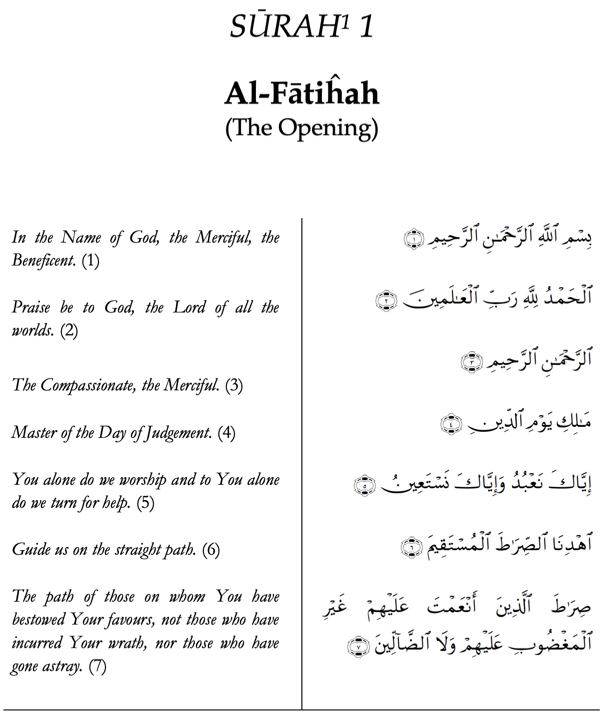
اللہ کے نام سے شروع جو نہایت مہربان، بہت رحم کرنے والا ہے۔ (1)
In the Name of God, the Merciful, the Beneficent. (1)
اس باب کا ترجمہ انگریزی سے خودکار طور پر کیا گیا ہے اور اس میں غلطیاں ہو سکتی ہیں۔ اصل متن پڑھیں
Al-Fatihah (The Opening)
اللہ کے نام سے شروع جو نہایت مہربان، بہت رحم کرنے والا ہے۔ (1)
In the Name of God, the Merciful, the Beneficent. (1)
تمام جہانوں کے رب، اللہ کی تعریف ہے۔ (2)
Praise be to God, the Lord of all the worlds. (2)
نہایت مہربان، بہت رحم کرنے والا۔ (3) جزا و سزا کے دن کا مالک۔ (4)
The Compassionate, the Merciful. (3) Master of the Day of Judgement. (4)
ہم تیری ہی عبادت کرتے ہیں اور تجھی سے مدد مانگتے ہیں۔ (5)
You alone do we worship and to You alone do we turn for help. (5)
ہمیں سیدھے راستے پر ہدایت فرما۔ (6)
Guide us on the straight path. (6)
ان لوگوں کا راستہ جن پر آپ نے اپنا فضل فرمایا، نہ کہ ان کا جن پر آپ کا غضب ہوا اور نہ ہی گمراہوں کا۔ (7)
The path of those on whom You have bestowed Your favours, not those who have incurred Your wrath, nor those who have gone astray. (7)
Overview
1 سورت قرآن کی ایک اکائی کا نام ہے۔ اس کے قریب ترین انگریزی لفظ 'chapter' ہے، لیکن چونکہ 'سورت' کا استعمال عربی میں صرف قرآن کی اکائیوں کو ظاہر کرنے کے لیے کیا جاتا ہے، اس لیے اسے انگریزی میں برقرار رکھا گیا ہے۔ قرآن میں مختلف طوالت کی 114 سورتیں ہیں۔
1 Sūrah is the name of a unit of the Qur’ān. The nearest English word is ‘chapter’, but since sūrah’ is used in Arabic to denote only units of the Qur’ān, it has been retained in English. The Qur’ān has 114 sūrahs of varying length.
ہر مسلمان دن میں کم از کم سترہ مرتبہ سات آیات والی اس مختصر سورت کی تلاوت کرتا ہے۔ نبی محمد ﷺکی ایک صحیح حدیث میں ہے: "جس نے فاتحہ نہیں پڑھی، اس کی نماز باطل ہے۔" اس مختصر سورت میں اسلام کے بنیادی مرکزی نظریات، اس کے عقائد اور تصورات کی ایک بڑی مقدار موجود ہے۔ یہ اس کے بہت سے ضروری ادراک اور رویوں کی وضاحت کرتی ہے۔ یہ سب اس بات کو واضح کرتا ہے کہ اسے کثرت سے تلاوت کے لیے کیوں منتخب کیا گیا ہے اور نماز کی صحت کے لیے یہ کیوں ضروری ہے۔
Every Muslim recites this short sūrah of seven verses at least seventeen times a day. An authentic ĥadīth of the Prophet Muĥammad (peace be upon him), says: “A prayer by one who does not read the Fātiĥah is invalid.” This short sūrah contains a great deal of the central basic ideas of Islam, its beliefs and concepts. It outlines many of its essential perceptions and attitudes. All this makes it clear why it is chosen for frequent recitation and why it is essential for the validity of prayer.
سورت کا آغاز اس جملے سے ہوتا ہے:
The sūrah opens with the phrase:
اللہ کے نام سے شروع جو نہایت مہربان، بہت رحم کرنے والا ہے۔ (آیت 1)
In the name of God, the Compassionate, the Merciful. (Verse 1)
اکثریت علماء کے نزدیک اسے سورت کی ایک آیت کے طور پر تسلیم کیا گیا ہے، جو اپنی جگہ مکمل ہے اور اس کی آیات کی تعداد کو سات تک مکمل کرتی ہے۔ تاہم، اس بارے میں اختلافِ رائے پایا جاتا ہے کہ آیا قرآن کی دیگر تمام سورتوں کے بارے میں بھی یہی معاملہ ہے جن میں یہی الفاظ افتتاحی جملے کے طور پر آتے ہیں۔ بعض علماء کا موقف ہے کہ درج ذیل قرآنی بیان کا تعلق سورہ الفاتحہ سے ہے: "ہم نے آپ کو سات بار دہرائی جانے والی آیات اور اس عظیم الشان قرآن سے نوازا ہے۔" (15: 87)
This is recognized by the majority of scholars as a verse of the sūrah, in its own right, completing its verses into seven. There is, however, a difference of opinion over whether this is so with respect to all other sūrahs of the Qur’ān in which the same words appear as the opening phrase. Some scholars maintain that it is to the Fātiĥah that the following Qur’ānic statement refers: “We have given you seven oft- repeated verses and this sublime Qur’ān.” (15: 87)
قرآن کی وہ بالکل پہلی آیات جو نبی محمد (ﷺ) پر نازل ہوئیں، جن کا آغاز اس طرح ہوتا ہے: "اپنے رب کے نام سے پڑھو..." (96: 1)، ہر کام کے آغاز میں اللہ کے نام کا ذکر کرنے کے اسلامی آداب کو قائم کرتی ہیں۔ یہ اس بنیادی اسلامی اصول کے عین مطابق بھی ہے کہ اللہ "پہلا بھی ہے اور آخری بھی، ظاہر بھی ہے اور باطن بھی۔" (57: 3) وہ ہی درحقیقت حقیقی وجود، اور ہر موجود چیز کا اصل اور سببِ وجود ہے۔ چنانچہ، اسی کے نام سے ہر حرکت اور عمل کیا جاتا ہے، اور اسی کے نام سے ہر چیز کا آغاز ہوتا ہے۔
The very first verses of the Qur’ān revealed to Prophet Muĥammad, which begin with: “Read in the name of your Lord...” (96: 1) establish the Islamic etiquette of invoking the name of God at the beginning of every action. This is also in line with the fundamental Islamic principle that God is “the first and the last, the outward and the inward.” (57: 3) He is indeed the real being, the origin and the raison d’être of all that exists. In His name, therefore, every movement and action is made, and in His name everything begins.
الرحمٰن اور الرحیم کی خدائی صفات رحمت کے تمام پہلوؤں اور معانی کا احاطہ کرتی ہیں، اور انہیں صرف اللہ تعالیٰ کے لیے ہی ایک ساتھ استعمال کیا جا سکتا ہے۔ کسی انسان کے حوالے سے صفت الرحیم کا استعمال مناسب ہو سکتا ہے، لیکن اسلامی عقیدے کے تقاضے کے مطابق الرحمٰن کا استعمال صرف اللہ کے لیے مخصوص ہے۔ جہاں تک اس بحث کا تعلق ہے کہ ان دونوں میں سے کون سا صفت رحمت اور شفقت کے وسیع تر معنی کو ظاہر کرتا ہے، تو اس کا یہاں ہم سے کوئی تعلق نہیں ہے۔ تاہم، ہم اس نتیجے پر پہنچ سکتے ہیں کہ جب انہیں ملا کر استعمال کیا جاتا ہے، تو یہ رحمت کے تمام پہلوؤں اور جہتوں کا احاطہ کرتے ہیں۔
The divine attributes of the Compassionate, al-Raĥmān, and the Merciful, al-Raĥīm, encompass all aspects and meaning of mercy, and can only be used together with respect to God Almighty. It would be appropriate to use the attribute of al-Raĥīm in reference to a human being, but the Islamic faith requires that use of al-Raĥmān is exclusive to God. As for the debate over which of the two adjectives denotes the wider meaning of mercy and compassion, it does not concern us here. We can conclude, however, that when combined, they encompass all aspects and dimensions of mercy.
چونکہ ہر کام کے آغاز میں اللہ کے نام کا ذکر کرنا مسلم عقیدے کے پہلے بنیادی اصول پر مشتمل ہے، اس لیے 'الرحمٰن' اور 'الرحیم' کے استعمال کو صرف اللہ تک محدود رکھنا دوسرا اصول ہے اور یہ اللہ اور انسان کے درمیان تعلق کی وضاحت کرتا ہے۔ اللہ کے نام کا ذکر کرنے اور اس کی لامحدود رحمت کا اعتراف کرنے کے بعد، انسان کو اللہ کی حمد و ثنا کرنے اور تمام مخلوقات پر اس کی مطلق حاکمیت کو تسلیم کرنے کی ہدایت کی جاتی ہے:
As the invocation of God’s name at the beginning of every action constitutes the first fundamental principle of the Muslim faith, the restriction of the use of al-Raĥmān and al-Raĥīm to God alone constitutes the second principle and defines the relationship between God and man. Having invoked God’s name and acknowledged His infinite mercy, one is directed to praise God and recognize His absolute sovereignty over all beings:
تمام جہانوں کے رب، اللہ کی تعریف ہے۔ (آیت 2)
Praise be to God, the Lord of all the worlds. (Verse 2)
اللہ کا ثنا کرنا وہ پہلا احساس ہے جو اللہ کے ذکر پر مومن کے دل میں بیدار ہوتا ہے۔ کیونکہ انسان کا اپنا وجود اللہ کے لامتناہی فضل کا ایک پہلو ہے، جو اللہ کے لیے شکر گزاری اور تعظیم کا جذبہ پیدا کرتا ہے۔ انسان اور دیگر مخلوقات کے لیے اللہ کی سخاوت اور فیاضی کے مظاہر ہر جگہ موجود ہیں اور ہر لمحہ دیکھے جا سکتے ہیں۔ ہر کام کے آغاز اور انجام میں اللہ کی حمد و ثنا کرنا اسلامی عقیدے کا ایک اور بنیادی اصول ہے۔ قرآن کہتا ہے: "وہی اللہ ہے، اس کے سوا کوئی معبود نہیں، تمام تعریفیں اسی کے لیے ہیں، اول بھی اور آخر بھی..." (28: 70)
Praise of God is the first feeling aroused in a believer’s heart at the mention of God. For man’s own existence is an aspect of God’s infinite grace, which engenders gratitude and reverence towards God. The manifestations of God’s munificence and generosity to man and other creatures abound everywhere and can be seen at every moment. To praise God at the beginning and at the end of every action is another fundamental principle of the Islamic faith. The Qur’ān says: “He is God; there is no deity but He. To Him belongs praise in the first and in the last...” (28: 70)
تاہم، اللہ کا فضل ایسا ہے کہ جب ایک مومن کہتا ہے، 'الحمدللہ' (تمام تعریفیں اللہ کے لیے ہیں)، تو اس کے لیے اسے ایک ایسی نیکی کے طور پر درج کیا جاتا ہے جو ہر چیز پر بھاری ہو۔ نبی کے صحابی، عمر ابن الخطاب بیان کرتے ہیں کہ نبی ﷺنے بتایا کہ ایک بار ایک شخص نے کہا، "اے میرے رب، میں تیری حمد بیان کرتا ہوں جو تیرے چہرے کی عظمت اور تیری قدرت کی بڑائی کے لائق ہے۔" اس شخص کے ساتھ موجود دو فرشتے اس کلام کا اندازہ نہ لگا سکے اور اللہ تعالیٰ کی طرف رجوع کیا، تو اللہ تعالیٰ نے انہیں حکم دیا: "اسے اس کے اعمال نامے میں ویسے ہی درج کر دو جیسا کہ اس نے کہا ہے، اور جب وہ میرے پاس آئے گا تو میں اسے اس کے استحقاق کے مطابق اجر دوں گا۔" اس آیت کا آخری حصہ، "تمام جہانوں کا رب"، اس مطلق کائناتی ربوبیت پر ایمان کا اظہار کرتا ہے جو کہ اللہ کے اسلامی تصور کا عین مرکز ہے۔ اللہ پورے کائنات کا واحد، مطلق اور حتمی مالک ہے جس کے پاس عمل کرنے کا مکمل آزادانہ اختیار ہے۔ وہ تمام تر اعلیٰ حاکم ہے جس نے دنیا کو پیدا کیا اور وہ اس کی نگرانی، دیکھ بھال اور اس کے استحکام و فلاح و بہبود کو یقینی بنانا جاری رکھے ہوئے ہے۔ خالق اور مخلوق کے درمیان یہ زندہ اور متحرک تعلق تمام مخلوقات کے لیے زندگی کا دائمی چشمہ ہے۔ اللہ نے دنیا کو پیدا کر کے اسے اس کے اپنے حال پر نہیں چھوڑا، بلکہ وہ اپنی مخلوق پر ایک فعال اور زندہ اتھارٹی کے طور پر قائم ہے، اور اسے وہ سب کچھ عطا کرتا رہتا ہے جو اس کی مسلسل اور بامقصد زندگی کے لیے ضروری ہے۔ یہ بات اللہ کی تمام مخلوقات پر لاگو ہوتی ہے۔
Nevertheless, God’s grace is such that when a believer says, ‘praise be to God,’ it is recorded for him as a good deed outweighing everything. `Umar ibn al-Khaţţāb, the Prophet’s Companion, relates that the Prophet (peace be upon him) told how a man once said, “Lord, I praise You as befits the majesty of Your face and the greatness of Your power.” The two angels accompanying that man could not evaluate the remark and referred to God Almighty, who commanded them: “Register it in his record as he said it, and I shall reward him as he deserves when he returns to Me.” The last part of this verse, “Lord of all the worlds”, expresses the belief in absolute universal Godhead which is at the very core of the Islamic concept of God. God is the sole, absolute and ultimate owner with full independent authority to act in the whole cosmos. He is the overall supreme master who has created the world and continues to watch over it, take care of it, and ensure its stability and well-being. This living and dynamic relationship between the Creator and the created is the perpetual fountain of life for all creation. God has not created the world and abandoned it to its own devices. He continues to be an active living authority over His creation, giving it what it needs for its continued and meaningful life. This applies to all God’s creation.
اللہ کی مطلق ربوبیت کا اقرار کرنا، اللہ کی مطلق وحدانیت کے حوالے سے وضاحت اور الجھن کے درمیان تمام فرق پیدا کر دیتا ہے۔ لوگ اکثر اللہ کو واحد خالق تسلیم کرنے کے ساتھ ساتھ اپنی زندگی میں اختیار رکھنے والے متعدد معبودوں پر بھی یقین رکھتے تھے۔ یہ بات مضحکہ خیز لگ سکتی ہے کہ لوگ کبھی ایسا عقیدہ رکھ سکتے ہیں، لیکن یہ ماضی میں بھی سچ تھا اور آج بھی سچ ہے۔ قرآن ان لوگوں کے بارے میں بات کرتا ہے جو دعویٰ کرتے ہیں کہ وہ "ان کی (چھوٹے معبودوں کی) صرف اس لیے عبادت کرتے ہیں تاکہ وہ ہمیں اللہ کے قریب کر سکیں۔" (39: 3) یہ اس کا بھی ذکر کرتا ہے کہ کچھ یہودی اور مسیحی گروہوں نے "اللہ کے ساتھ اپنے ربا (مذہبی پیشواؤں) اور پادریوں کو معبود بنا لیا ہے۔" (9: 31) جب ساتویں صدی میں عرب میں اسلام نمودار ہوا، تو شرک، یعنی تصور شدہ 'عظیم معبود' کے علاوہ کئی معبودوں یا نیم معبودوں کی عبادت، بڑے پیمانے پر پھیلی ہوئی تھی۔
Acknowledging God’s absolute Lordship makes all the difference between clarity and confusion with regard to God’s absolute oneness. People often combined their acknowledgement of God as the sole creator with belief in multiple deities having authority in their life. It may seem absurd that people should ever hold such a belief, but this was true in the past and is still true today. The Qur’ān speaks of those who claim that they “only worship them [minor gods] so that they may bring us nearer to God.“ (39: 3) It also mentions that some Jewish and Christian groups who “have taken their rabbis and priests as gods alongside God.” (9: 31) Polytheism, or the worship of several deities or demigods besides the perceived ‘Grand Deity’, was widespread when Islam emerged in the 7th century in Arabia.
ایک خدا کی مطلق حاکمیت اور فعال اختیار کا اقرار۔
The affirmation of the absolute sovereignty and active authority of the One God.
مجموعی طور پر تمام کائنات کی تخلیق انسان کی عقلیت اور ذہنی سکون کو یقینی بنانے، اور اسے شرک کی ظالمانہ حیرت و پریشانی سے نجات دلانے کے لیے ضروری تھی۔ انسان کو اس بات کا اطمینان ہونا چاہیے کہ ایک چوکنا اور خیال رکھنے والا خدا اس دنیا کا نگران ہے اور وہ اسے کبھی تنہا نہیں چھوڑے گا اور نہ ہی اس سے دستبردار ہوگا۔
over all creation was necessary to ensure man’s rationality and peace of mind, and to relieve him from the cruel bewilderment of polytheism. Man must be reassured that a vigilant and caring God is in charge of this world and will never abandon or forsake it.
اسلام کی آمد کے وقت، دنیا غلط عقائد اور فلسفوں، اور توہم پرستی، افسانوں اور دیومالائی کہانیوں پر مبنی جھوٹے مذاہب سے بھری ہوئی تھی۔ ان میں سے بہت کم چیز سچی یا عقلی تھی۔ جہاں تک اللہ کے تصور اور انسان اور دنیا کے ساتھ اس کے تعلق کا تعلق تھا، وہاں بہت زیادہ بدترین الجھن پائی جاتی تھی۔ اس کے نتیجے میں انسان کی دنیا کے بارے میں سمجھ اور اس میں اپنے مقام اور کردار کے بارے میں بھی الجھن پیدا ہوئی۔
At the advent of Islam, the world was full of erroneous beliefs and philosophies, and of false religions based on superstition, legend and mythology. Very little of it was true or even rational. As far as the concept of God and His relationship with man and the world was concerned, there was plenty of miserable confusion. This in turn led to confusion in man’s understanding of the world and of his own position and role within it.
عقائد کے ایک عقلی، واضح اور مستقل مزاج نظام کی ضرورت صرف انسانی تاریخ کے ان تاریک ادوار کے مطالعہ سے ہی واضح ہوتی ہے جب ایسا کوئی نظام موجود نہ تھا۔ تب ہمیں احساس ہوتا ہے کہ اس طرح کے عظیم افسانوں اور غلط عقائد کا انسان پر کتنا بھاری بوجھ ہوتا ہے۔ جب ہم قرآن میں مخصوص واقعات کا مطالعہ کریں گے تو اس بارے میں مزید تفصیلات سامنے آئیں گی۔
The need for a rational, clear and consistent system of beliefs only becomes apparent when we study those dark periods of human history when there was no such system. We then realize how heavily such great myth and false beliefs weigh on man. There will be more on this when we come to study specific instances in the Qur’ān.
اسی ضرورت کے پیشِ نظر اسلام نے انسان کے عقائد کی اصلاح کرنے اور خدا کے تصور، اس کی ذات، اس کی صفات اور خالق و مخلوق کے درمیان تعلق کی نہایت واضح تعریف کرنے پر بھرپور توجہ دی ہے۔
It is in the light of such need that Islam has taken great care to correct man’s beliefs and define very clearly the concept and nature of God and His attributes, and the relationship between Creator and creation.
یہ اللہ کی وحدانیت کے اسلامی تصور میں مجسم ہے، جو اسلام کا جوہر اور سب سے بنیادی اصول ہے۔ اس بات کے اثبات کو قائم کرنے اور اس کی وضاحت کرنے پر بہت زیادہ توجہ دی گئی ہے کہ اللہ ایک ہے، جو تمام موجودات کا مطلق اور برتر رب اور مالک ہے۔ اس تصور کا دوسرا پہلو جس پر اسلام نے سب سے زیادہ توجہ دی ہے، وہ اللہ کی صفات کی تعریف ہے، جو کہ صدیوں سے بہت زیادہ الجھن، ابہام اور خلط ملط مذہبی و فلسفیانہ سوچ کا باعث رہی ہے۔
This is embodied in the Islamic concept of God’s oneness, the essence and most fundamental principle of Islam. Much care has been devoted to establishing and elucidating the affirmation that God is the One, absolute and transcendent Lord and Master of all that exists. The other aspect of this concept to which Islam has given its greatest attention is the definition of God’s attributes, which has been the cause of much confusion, obfuscation and muddled religious and philosophical thinking through the ages.
جس شدت، زور اور تفصیل کے ساتھ اسلام نے اللہ کی وحدانیت کے تصور اور اس سے متعلقہ تمام موضوعات پر بحث کی ہے، اس کی قدر و قیمت صرف ان غلط عقائد اور الجھی ہوئی الہیات کے پس منظر میں ہی کی جا سکتی ہے جو تاریخ کے تسلسل میں جمع ہوتے رہے ہیں۔ اس تناظر میں، اسلام کو انسانیت پر نازل ہونے والی الہی رحمت کے ایک گہرے اور بروقت عمل کے طور پر آسانی سے دیکھا جا سکتا ہے — ایسی رحمت جو خوبصورتی، سادگی، وضاحت، ہم آہنگی اور انسانی فطرت کے مکمل مطابقت کے ساتھ عطا کی گئی ہے۔
The intensity, emphasis and detail with which Islam has dealt with the concept of God’s oneness, and all subjects related to it, can only be appreciated against the background of the great mass of erroneous beliefs and confused theologies that had accumulated in the course of history. From this perspective, Islam can readily be seen as a profound and timely act of divine mercy bestowed on humanity — mercy that is given with beauty, simplicity, clarity, harmony and full accordance with human nature.
نہایت مہربان، بہت رحم کرنے والا۔ (آیت 3)
The Compassionate, the Merciful. (Verse 3)
یہ دو ایسی صفات ہیں جو رحمت اور شفقت کے تمام معانی اور پہلوؤں کا احاطہ کرتی ہیں، اور اللہ تعالیٰ کی صفت کے طور پر رحمت کی بھرپور عکاسی کرتی ہیں۔ یہ دو صفات رب بطور خالق اور اس کی مخلوق کے درمیان تعلق کی وضاحت کرتی ہیں۔ یہ ایک ایسا تعلق ہے جو مکمل طور پر محبت، امن، اطمینان اور دیکھ بھال پر مبنی ہے، اور جو انسان کے اندر اللہ تعالیٰ کے لیے شکر گزاری اور حمد و ثنا کا ایک فطری احساس پیدا کرتا ہے۔
These are two attributes that encompass all meanings and aspects of mercy and compassion, and epitomize mercy as a property of God Almighty. These two attributes define the link between the Lord as Creator and His creation. It is a link based entirely on love, peace, reassurance and care, and which inspires within man a spontaneous feeling of gratitude and praise towards God.
یونانی اساطیر یا عہد نامہ قدیم (پیدائش، 4: 11-12) کے برعکس، اسلام خدا کو ایک ایسے دشمن کے طور پر پیش نہیں کرتا جو انتھک انتقام کے ساتھ انسان کا پیچھا کرتا ہو، یا جو کینہ اور بدخواہی کے ساتھ اپنی مخلوق کے خلاف سازشیں اور تدبیریں کرتا ہو۔
Unlike Greek mythology or the Old Testament (Genesis, 4: 1112), Islam does not depict God as an enemy who pursues man with relentless vengeance, or plots and schemes against His creation with spite and vindictiveness.
قیامت کے دن کا مالک۔ (آیت 4)
Master of the Day of Judgement. (Verse 4)
یہ آیت ایک بنیادی اسلامی اصول بیان کرتی ہے جس کا انسانی زندگی پر انتہائی گہرا اثر ہے: آخرت پر ایمان۔ قرآن اس عجیب حقیقت پر تبصرہ کرتا ہے کہ لوگ اکثر خدا کو خالق کے طور پر تو مانتے رہے ہیں لیکن یومِ حساب، یعنی آنے والی زندگی پر ایمان لانے میں ناکام رہے ہیں، جب انصاف کا توازن بحال کرنے کے لیے جزا اور سزا دی جائے گی۔ انہی کے حوالے سے قرآن فرماتا ہے: "اگر آپ ان سے پوچھیں کہ 'آسمانوں اور زمین کو کس نے پیدا کیا؟' تو وہ یقیناً جواب دیں گے، 'اللہ'" (31: 25)۔ دوسری جگہ قرآن ایسے لوگوں کے بارے میں فرماتا ہے: "وہ اسے عجیب سمجھتے ہیں کہ ان ہی میں سے کوئی ڈرانے والا آ گیا ہے۔ چنانچہ منکر کہتے ہیں، یہ تو ایک عجیب بات ہے! [کیا ہم دوبارہ زندہ کیے جائیں گے] اس کے بعد کہ ہم مر چکے اور محض مٹی ہو چکے؟ ایسی واپسی تو واقعی بعید نظر آتی ہے!" (50: 2-3)
This verse states a fundamental Islamic principle that has a most profound influence on human life: belief in the hereafter. The Qur’ān comments on the curious fact that people have often believed in God as Creator but have failed to believe in a Day of Judgement, in a life to come, when reward and punishment are meted out to restore the balance of justice. It is in reference to these that the Qur’ān says: “If you ask them, ‘Who is it that created the heavens and the earth?’ they will surely answer, ‘God’” (31: 25) Elsewhere the Qur’ān says of such people: “They deem it strange that a warner should have come to them from their own midst. Thus, the unbelievers say, A strange thing is this! [Are we to be resurrected] after we have died and become mere dust? Such a return seems far-fetched indeed!’“ (50: 2-3)
آخرت پر ایمان لانا ضروری ہے کیونکہ یہ انسانی روح اور ذہن کو مصروف رکھتا ہے اور انسان کی توجہ ایک مستقبل کی زندگی پر مرکوز کرتا ہے۔ یہ عمل انسان کو موجودہ زندگی کے جنون پر قابو پانے اور اپنی فوری دنیاوی خواہشات سے بالاتر ہونے میں مدد دیتا ہے۔ وہ اب یہاں اور اسی وقت اپنے تمام انعامات حاصل کرنے کے لیے بے چین نہیں رہتا؛ وہ اپنے خود غرضی پر قابو پا سکتا ہے اور ایثار و قربانی کے جذبات اور مفادات پروان چڑھا سکتا ہے۔ انسان ایک با مقصد، روادار، پراعتماد اور پرامید وجود کے طور پر زندگی گزارنے کے قابل ہو جاتا ہے۔
Belief in the hereafter is essential because it engages the human soul and mind and concentrates man’s attention on a future existence. This in turn helps to rein in man’s obsession with the present life, and to transcend his immediate earthly desires. He is no longer anxious to reap all his rewards here and now; he can conquer his selfishness and develop altruistic feelings and interests. Man is able to go through life as a motivated, tolerant, confident and optimistic being.
یہ مرکزی اسلامی عقیدہ اس بات کے درمیان واضح فرق کرتا ہے کہ انسان اس اخلاقی اور فکری آزادی کو حاصل کرنے کی جستجو کرے جس کا وہ مستحق ہے اور جس کی اسے ضرورت ہے، اور دنیاوی و خود غرضانہ خواہشات اور لذتوں کے آگے سر تسلیم خم کر دے۔ یہ ایک متوازن اور ضمیر سے زندہ انسانیت اور ایک خود پسند اور خود غرض انسانیت کے درمیان فرق کو واضح کرتا ہے۔
This central Islamic belief distinguishes clearly between aspiring to gain the moral and intellectual freedom that man needs and deserves, and capitulation to worldly and selfish desires and pleasures. It marks the difference between a well-balanced and conscientious humanity and an egotistic, self-seeking one.
انسانی زندگی کبھی بھی متوازن اور منصفانہ نہیں ہو سکتی جب تک لوگ اس بات پر یقین نہ کر لیں کہ جو کچھ وہ اس فانی زندگی میں کماتے ہیں، وہی سب کچھ اور آخری مقصد نہیں ہے۔ انسان کو اس پختہ یقین کی تحریک کی ضرورت ہے کہ ایک اور زندگی اس کے منتظر ہے، جو اس جدوجہد، قربانیوں اور کوششوں کے قابل ہے جو اسے اس مختصر زندگی میں کرنی پڑ سکتی ہیں۔ یہ عقیدہ ان لوگوں کے احساسات، رویوں اور طرزِ عمل میں ایک بنیادی فرق پیدا کرتا ہے جو اس پر قائم رہتے ہیں۔
Human life can never be balanced and equitable until people believe that what they earn in this transient life is not the be-all and the end- all. Man needs to have the incentive of a confident belief that another life awaits him, which is worth the struggle and the sacrifices and the effort he may have to make here in this short one. This belief brings a fundamental difference in the feelings, attitudes and behaviour of those who uphold it.
ہم تیری ہی عبادت کرتے ہیں اور تجھی سے مدد مانگتے ہیں۔ (آیت 5)
You alone do we worship and to You alone do we turn for help. (Verse 5)
یہ آیت ایک اور بنیادی اصول کا اظہار کرتی ہے جو منطقی طور پر گزشتہ اصولوں کے تسلسل میں ہے۔ یہ ایک فیصلہ کن اور اہم اصول بھی ہے جو اس آزادی کے درمیان ایک لکیر کھینچتا ہے جو انسان اللہ کے سامنے سرنگوں ہونے سے حاصل کرتا ہے، اور اس بدعنوانی اور پستی کے درمیان جو انسان کے انسان کے غلام ہونے میں پوشیدہ ہے۔
This verse expresses another fundamental principle that follows logically from the preceding ones. It is also a decisive and crucial principle that draws a line between the freedom man gains in submitting to God and the abuse and debasement implicit in man’s servitude to man.
جب انسان خود کو اللہ کے سپرد کر دیتا ہے اور صرف اسی سے مدد اور ہدایت مانگتا ہے، تو وہ تمام مذہبی، فکری، اخلاقی اور سیاسی طاقتوں کے ظلم و ستم سے مکمل آزادی حاصل کر لیتا ہے۔
Once man has submitted himself to God and sought help and guidance from Him alone, he has achieved total liberation from the tyranny of all religious, intellectual, moral and political powers.
اسلام کے مومن کے لیے انسانی طاقت دو اقسام میں تقسیم ہوتی ہے: ایک ہدایت یافتہ طاقت جو خدا کو پہچانتی ہے اور اس کی ہدایات کی پابندی کرتی ہے، اور دوسری ایک مغرور اور باغی طاقت جو خدا کی حاکمیت اور اقتدار کا اعتراف نہیں کرتی۔ ایک مسلمان کے لیے ضروری ہے کہ وہ پہلی قسم کی طاقت کی حمایت اور تائید کرے، خواہ وہ کتنی ہی کمزور یا محروم کیوں نہ ہو، اور دوسری قسم کی طاقت کو مسترد کرے اور اس کی مخالفت کرے، خواہ وہ کتنی ہی طاقتور یا غالب کیوں نہ ہو۔ قرآن کہتا ہے: "بہت سے چھوٹے گروہ، اللہ کے فضل سے، بڑے گروہوں پر غالب آ گئے ہیں۔" (2: 249) ظاہری طور پر کمزور لشکر کی ایسی فتح صرف اسی صورت میں حاصل ہو سکتی ہے جب وہ اللہ پر بھروسہ کرے، جو تمام طاقتوں کا سرچشمہ ہے۔
To the believer in Islam, human power falls into two categories: a rightly-guided power that recognizes God and abides by His directions, and an arrogant, rebellious one that does not admit to God’s sovereignty and authority. A Muslim is required to support and endorse the former, no matter how weak or disadvantaged it may be, and to reject and oppose the latter, regardless of its strength or dominance. The Qur’ān says: “Many a small band, by the grace of God, has vanquished a large one.” (2: 249) Such victory of the apparently weaker host could only be achieved when it relies on God, the source of all power.
قدرتی قوتوں کے حوالے سے ایک مسلمان کا رویہ خوف یا دشمنی کے بجائے تجسس اور دوستی کا ہوتا ہے۔ انسان کی قوتوں اور فطرت کی قوتوں کو اللہ کی اپنی قدرت کے ثمرات کے طور پر دیکھا جاتا ہے، جو کہ اس کی مرضی کے تابع ہیں۔ چنانچہ، یہ ایک دوسرے کے مکمل طور پر متمم اور ایک دوسرے پر منحصر ہیں۔
Towards natural forces, a Muslim’s attitude is one of curiosity and friendliness rather than fear or hostility. The powers of man and the powers of nature are perceived as by-products of God’s own power, and subject to His will. They are, therefore, perfectly complementary and interdependent.
اسلام یہ تعلیم دیتا ہے کہ اللہ تعالیٰ نے اس مادی دنیا اور اس کی تمام قوتوں کو انسان کے استعمال اور فائدے کے لیے پیدا کیا ہے۔ انسان کو خاص طور پر اپنے ارد گرد کی دنیا کا مطالعہ کرنے، اس کی صلاحیتوں کو دریافت کرنے اور اپنے اور اپنے ساتھی انسانوں کے بھلے کے لیے اپنے تمام ماحول کو استعمال کرنے کی تعلیم اور ہدایت دی گئی ہے۔ فطرت کے ہاتھوں انسان کو پہنچنے والا کوئی بھی نقصان صرف اس کی جہالت یا فطرت اور اسے کنٹرول کرنے والے قوانین کی سمجھ بوجھ کی کمی کا نتیجہ ہے۔ انسان فطرت کے بارے میں جتنا زیادہ سیکھتا ہے، فطرت اور ماحول کے ساتھ اس کا تعلق اتنا ہی پرامن اور ہم آہنگ ہوتا جاتا ہے۔
Islam teaches that God has created the physical world and all its forces for man’s own use and benefit. Man is specifically taught and directed to study the world around him, discover its potential and utilize all his environment for his own good and the good of his fellow humans. Any harm that man suffers at the hands of nature is a result only of his ignorance or lack of understanding of it and of the laws governing it. The more man learns about nature, the more peaceful and harmonious his relationship with nature and the environment.
لہٰذا "فطرت کو فتح کرنے" کا تصور بلا شبہ مذموم اور منفی نظر آتا ہے۔ یہ اسلامی تصورات کے منافی ہے اور اس روح سے بے حیاانہ جہالت کا اظہار کرتا ہے جس میں یہ دنیا تخلیق کی گئی ہے اور اس کے پیچھے چھپی ہوئی الٰہی حکمت سے بھی غافل ہے۔
Hence the notion of “conquering nature” can readily be seen as cynical and negative. It is alien to Islamic perceptions and betrays a shameless ignorance of the spirit in which the world has been created and the divine wisdom that underlies it.
دنیا کی تشکیل اور اس کے نظام کو چلانے میں اللہ کے ہاتھ اور اس کے کردار سے ہمیشہ باخبر رہنے کی وجہ سے، مسلمانوں کا فطرت کے ساتھ انسان کے تعلق کے بارے میں ایک مثبت، دوستانہ اور تعمیری نظریہ ہے۔ سادہ الفاظ میں، یہ اس بات کا اعتراف کرتا ہے کہ اللہ ان تمام قوتوں کا اصل اور خالق ہے، جو اصولوں اور قوانین کے ایک ہی مجموعے پر مبنی ہیں۔ انہیں ایک مشترکہ مقصد کے لیے، ہم آہنگی، مطابقت اور باہمی تعاون کے ساتھ مل کر کام کرنے کے لیے ڈیزائن کیا گیا ہے۔ فطرت کی قوتیں بنیادی طور پر انسان کے تابع ہیں، جو ذہنی اور جسمانی طور پر انہیں پہچاننے، ان کے رازوں کو سلجھانے، ان پر حکمرانی کرنے والے قوانین کو سمجھنے اور اس کے بعد زمین پر زندگی کے معیار کو بہتر بنانے کے لیے انہیں استعمال کرنے کے قابل بنایا گیا ہے۔ قرآن اس بات کی تصدیق کرتا ہے: "اس نے زمین پر جو کچھ ہے، سب تمہارے تابع کر دیا ہے۔" (45: 13)
Being always aware of God’s hand and role in shaping and running the world, Muslims have a positive, friendly and constructive outlook on man’s relationship with nature. Simply stated, it acknowledges God as the origin and Creator of all these forces, on the basis of the same set of axioms and laws. They are designed to function together, for a common purpose, in harmony, compatibility and mutual support. The forces of nature are essentially subservient to man, who is mentally and physically equipped to discern them, unravel their secrets, comprehend the laws governing them and, subsequently, to harness them to improve the quality of life on earth. The Qur’ān asserts: “He has all that is on the earth subservient to you.” (45: 13)
ایسا نظریہ خوف یا تنہائی کے تمام آثار کو ختم کر دیتا ہے اور اس کے بجائے تعلق کے ایک گہرے احساس کو جنم دیتا ہے جس میں انسان کو نہ صرف دنیا کے مجموعی ڈیزائن کا ایک لازمی حصہ بلکہ ایک بنیادی طور پر مؤثر اور بااثر حصہ بھی سمجھا جاتا ہے۔ اس طرح، اس کی دنیا ایک دوستانہ دنیا بن جاتی ہے۔ اس کا بہترین اظہار نبی (Peace be upon him) نے اس وقت کیا جب انہوں نے ایک بار کوہ احد کا سامنا کیا، جو مسلمانوں کے لیے ایک تلخ شکست کا مقام تھا، اور فرمایا، "ہم اس پہاڑ سے کتنی محبت کرتے ہیں، اور یہ ہم سے کتنی محبت کرتا ہے!" یہ مختصراً اس ہم آہنگی کا اظہار ہے جو نبی (Peace be upon him) نے فطرت کے ساتھ محسوس کی، یہاں تک کہ اس کی انتہائی دشوار گزار شکلوں میں بھی۔
Such an outlook eliminates all traces of fear or isolation and allows, instead, a profound sense of belonging in which man is seen not only as an integral part of the overall design of the world, but also an essentially effective and influential one. Thus, his world becomes a friendly one. This is best expressed by the Prophet when he once faced Mount Uĥud, the scene of a bitter defeat for Muslims, and said, “How we love this mountain, and how it loves us!” This expresses in a nutshell the affinity the Prophet felt towards nature even in its most rugged forms.
ان بنیادی اصولوں کو قائم کرنے کے بعد، یہ سورت ان پر عمل کرنے کے کچھ عملی طریقوں کی طرف اشارہ کرتی ہے، جن میں سب سے اہم نماز ہے:
Having established these fundamental principles, the sūrah points the way to certain practical means of responding to them, foremost among which is prayer:
ہمیں سیدھے راستے پر چلا؛ ان لوگوں کے راستے پر جن پر تو نے اپنا فضل کیا، نہ کہ ان کے جن پر تیرا غضب ہوا اور نہ ہی گمراہوں کے۔ (آیات 6-7)
Guide us on the straight path; the path of those on whom You have bestowed Your favours, not those who have incurred Your wrath, nor those who have gone astray. (Verses 6-7)
ان الفاظ کے ساتھ ایک مومن سیدھے راستے کی ہدایت اور اس پر چلنے میں مدد کے لیے التجا کرتا ہے، جو اللہ کی ہدایت، دیکھ بھال اور رحمت کے بغیر حاصل نہیں کیا جا سکتا۔ اس کا اعتراف کرنا بذاتِ خود تمام چیزوں اور واقعات پر اللہ کی حاکمیت اور غلبے کا اقرار ہے۔
With these words a believer pleads to be shown the Right Way and to be helped along it, which cannot be achieved without God’s guidance, care and mercy. To acknowledge that is in itself a recognition of God’s sovereignty and dominance over all things and events.
زندگی گزارنے کے صحیح راستے کی رہنمائی دنیا اور آخرت میں انسان کی خوشی کی ضمانت دیتی ہے۔ یہ درحقیقت انسانی فطرت اور انسان کے جبلت، خواہشات اور الہامات کو اللہ کی مرضی کی پہچان اور فہم کی طرف رہنمائی کر کے حاصل ہوتا ہے، جس سے انسانی سرگرمیوں کو قدرتی نظام اور مادی دنیا کے ساتھ ہم آہنگ کر دیا جاتا ہے۔
Guidance to the right way of life guarantees man’s happiness in this world and in the hereafter. It comes about, in effect, by guiding human nature and man’s instincts, desires and inspirations towards the recognition and comprehension of the divine will, so bringing human activity into rhythm with the natural order and the physical world.
یہ سورت "صراطِ مستقیم" کی حقیقت کو اس طرح ظاہر کرتی ہے کہ یہ وہ راستہ ہے جس پر وہ لوگ چلتے ہیں جن پر اللہ نے فضل فرمایا ہے، نہ کہ ان لوگوں کا راستہ جنہوں نے حق سے انحراف کے ذریعے اللہ کی ناراضگی حاصل کی، اور نہ ہی ان غافل لوگوں کا جو حق سے واقف نہیں ہیں۔ یہ خوش بختی اور نجات کا راستہ ہے۔
The sūrah reveals the nature of the “straight path” as being one taken by those whom God has favoured, not the way of those who have earned His displeasure by their deviation from the Truth, nor that of the heedless who have no knowledge of the truth. It is the path of happiness and salvation.
یہ پھر سورۃ الفاتحہ ہے، وہ سورت جسے روزانہ کثرت سے تلاوت کرنے کے لیے منتخب کیا گیا ہے، جس کے بغیر اسلامی نمازیں باطل ہیں۔ اپنی اختصار کے باوجود، اس میں اسلامی عقیدے کے کچھ بنیادی ترین اصول اور ان سے حاصل ہونے والی مخصوص بصیرتیں شامل ہیں۔
This, then, is al-Fātiĥah, the sūrah selected for frequent daily recitation, without which Islamic prayers are invalid. Despite its brevity, it contains some of the most fundamental principles of the Islamic faith and certain insights that arise from them.
مستند طور پر نبی Muhammad (Peace be upon him) سے روایت ہے کہ آپ نے اللہ کا قول نقل فرمایا کہ نماز کے ثمرات میرے اور میرے بندے کے درمیان برابر تقسیم کیے جاتے ہیں، اور میرے بندے کو وہ سب دیا جائے گا جو وہ مانگے گا۔ جب عبادت گزار [نماز میں] تلاوت کرتا ہے: "تمام تعریفیں اللہ ہی کے لیے ہیں جو تمام جہانوں کا رب ہے،" تو اللہ فرمائے گا: 'میرے بندے نے میری تعریف کی۔' جب وہ تلاوت کرتا ہے: "نہایت مہربان، بہت رحم کرنے والا،" تو اللہ فرمائے گا: 'میرے بندے نے میرا شکر ادا کیا۔' جب وہ تلاوت کرتا ہے: "روزِ جزا کا مالک،" تو اللہ فرمائے گا: "میرے بندے نے میری تعظیم کی۔" جب وہ کہتا ہے: "ہم تیری ہی عبادت کرتے ہیں اور تجھ ہی سے مدد مانگتے ہیں،" تو اللہ فرمائے گا: 'یہ میرے اور میرے بندے کے درمیان ہے، اور میرے بندے کو وہ ملے گا جو وہ مانگے گا۔' اور جب وہ کہتا ہے: "ہمیں سیدھے راستے پر چلا، ان لوگوں کے راستے پر جن پر تو نے اپنا فضل کیا، نہ کہ ان کے جن پر تیرا غضب ہوا اور نہ ہی گمراہوں کے،" تو اللہ فرمائے گا: 'یہ میرے بندے کے لیے ہے، اور اسے اس کی خواہش عطا کی جائے گی۔" یہ حدیث al-Fātiĥah کے بعض معانی کی وضاحت کرتی ہے۔ قاری کو شاید یہ سمجھنے میں مددگار محسوس ہو کہ اللہ نے مسلمانوں کے لیے اس sūrah کو دن میں کم از کم سترہ مرتبہ تلاوت کے لیے کیوں منتخب کیا ہے، جب وہ رات اور دن میں پھیلی ہوئی اپنی فرض نمازوں کے لیے کھڑے ہوتے ہیں، اور اس سے بھی زیادہ کثرت سے، جب بھی وہ نفل نمازیں ادا کرتے ہیں۔
The Prophet Muĥammad is reliably reported to have quoted God as saying that the fruits of prayer are shared equally between Me and My servant, and My servant will be granted what he asks for. As the worshipper recites [in Prayer]: “Praise be to God, the Lord of all the worlds,” God will say: ‘My servant has praised Me.’ As he recites: “The Compassionate, the Merciful,” God will say: ‘My servant has thanked Me.’ As he recites: “Master of the Day of Judgement,” God will say: “My servant has glorified Me.” As he says: “You alone do we worship, and to You alone do we turn for help,” God will say: ‘This is between Me and My servant, and My servant will receive what he asks for.’ And, as he says: “Guide us on the straight path, the path of those on whom You have bestowed Your favours, not those who have incurred Your wrath, nor those who have gone astray,” God will say: ‘This is for My servant, and he will be granted his wish.’“ This ĥadīth explores some of the meanings of al-Fātiĥah. The reader will perhaps find it helpful in understanding why God has chosen this sūrah for recitation by Muslims at least seventeen times a day, as they stand up for their obligatory prayers, spread over the night and day, and even more frequently, whenever they offer voluntary prayers.