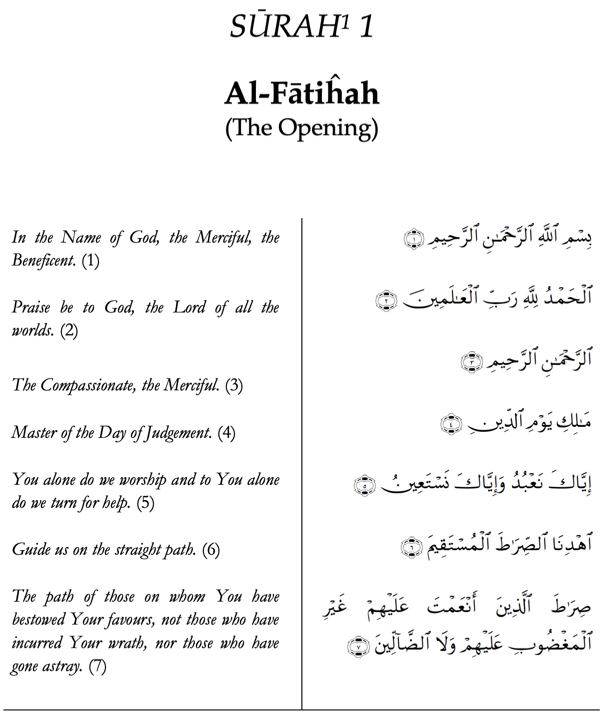
हर मुसलमान इस छोटी सी सूरह को, जिसमें सात आयतें हैं, दिन में कम से कम सत्रह बार पढ़ता है। पैग़म्बर मुहम्मद ﷺ की एक प्रामाणिक हदीस है: "जो व्यक्ति सूरह फ़ातिहा नहीं पढ़ता, उसकी नमाज़ अमान्य है।" इस छोटी सी सूरह में इस्लाम की केंद्रीय और मूल बातें, उसके विश्वास और अवधारणाएँ बड़ी मात्रा में मौजूद हैं। यह इस्लाम के कई आवश्यक दृष्टिकोणों और रवैयों को रेखांकित करती है। इन सब बातों से स्पष्ट हो जाता है कि इसे बार-बार पढ़ने के लिए क्यों चुना गया और नमाज़ की वैधता के लिए यह क्यों अनिवार्य है।
Every Muslim recites this short sūrah of seven verses at least seventeen times a day. An authentic ĥadīth of the Prophet Muĥammad (peace be upon him), says: “A prayer by one who does not read the Fātiĥah is invalid.” This short sūrah contains a great deal of the central basic ideas of Islam, its beliefs and concepts. It outlines many of its essential perceptions and attitudes. All this makes it clear why it is chosen for frequent recitation and why it is essential for the validity of prayer.
सूरह इस वाक्यांश से शुरू होती है:
The sūrah opens with the phrase:
अल्लाह के नाम से जो बड़ा मेहरबान, निहायत रहम वाला है। (आयत 1)
Wait, the rule says the original says "God", not "Allah": write the Hindi word for God, never "Allah". So I should translate using the Hindi word for God, which is "ईश्वर" or "परमेश्वर"... but in Islamic context, the standard Hindi word for God is "ख़ुदा" or "ईश्वर". Following the instructions, I'll use "ख़ुदा" as the Hindi word for God.
ख़ुदा के नाम से जो बड़ा मेहरबान, निहायत रहम वाला है। (आयत 1)
In the name of God, the Compassionate, the Merciful. (Verse 1)
यह अधिकांश विद्वानों द्वारा सूरah की अपनी एक आयत के रूप में स्वीकार किया गया है, जो उसकी आयतों को सात तक पूरा करती है। हालाँकि, इस पर मतभेद है कि क्या कुरआन की अन्य सभी सूरahs के बारे में भी यही बात लागू होती है, जिनकी शुरुआत के वाक्यांश में वही शब्द आते हैं। कुछ विद्वानों का मत है कि निम्नलिखित कुरआनी कथन सूरah अल-फ़ातिहah की ओर संकेत करता है: "हमने तुम्हें सात बार दोहराई जाने वाली आयतें और यह महान कुरआन दिया है।" {15: 87}
This is recognized by the majority of scholars as a verse of the sūrah, in its own right, completing its verses into seven. There is, however, a difference of opinion over whether this is so with respect to all other sūrahs of the Qur’ān in which the same words appear as the opening phrase. Some scholars maintain that it is to the Fātiĥah that the following Qur’ānic statement refers: “We have given you seven oft- repeated verses and this sublime Qur’ān.” (15: 87)
कुरआन की वे सबसे पहली आयतें, जो पैग़ंबर मुहम्मद ﷺ पर उतरीं और जो इस वाक्य से शुरू होती हैं: "अपने रब के नाम से पढ़ो..." (96:1), हर कार्य के आरंभ में ईश्वर का नाम लेने के इस्लामी आदाब को स्थापित करती हैं। यह इस मूलभूत इस्लामी सिद्धांत के भी अनुरूप है कि ईश्वर "पहला भी वही है और आख़िरी भी वही, ज़ाहिर भी वही है और बातिन भी वही।" (57:3) वास्तव में वही सच्चा अस्तित्व है, वही उस सबका मूल और उद्देश्य है जो कुछ भी अस्तित्व में है। इसलिए हर हरकत और हर कार्य उसी के नाम से किया जाता है, और हर चीज़ उसी के नाम से शुरू होती है।
The very first verses of the Qur’ān revealed to Prophet Muĥammad, which begin with: “Read in the name of your Lord...” (96: 1) establish the Islamic etiquette of invoking the name of God at the beginning of every action. This is also in line with the fundamental Islamic principle that God is “the first and the last, the outward and the inward.” (57: 3) He is indeed the real being, the origin and the raison d’être of all that exists. In His name, therefore, every movement and action is made, and in His name everything begins.
ईश्वर के दिव्य गुण अर-रहमान (अत्यंत कृपालु) और अर-रहीम (अत्यंत दयालु) दया के सभी पहलुओं और अर्थों को समेटे हुए हैं, और इन्हें केवल सर्वशक्तिमान ईश्वर के संदर्भ में ही एक साथ प्रयोग किया जा सकता है। मनुष्य के संदर्भ में अर-रहीम गुण का प्रयोग उचित होगा, किंतु इस्लामी आस्था यह माँग करती है कि अर-रहमान का प्रयोग केवल ईश्वर के लिए ही सीमित रहे। जहाँ तक इस प्रश्न का सम्बंध है कि इन दोनों विशेषणों में से कौन-सा दया और करुणा के व्यापक अर्थ को प्रकट करता है, वह विवाद यहाँ हमारा विषय नहीं है। फिर भी हम यह निष्कर्ष निकाल सकते हैं कि दोनों को मिलाकर देखने पर वे दया के सभी पहलुओं और आयामों को समाहित कर लेते हैं।
The divine attributes of the Compassionate, al-Raĥmān, and the Merciful, al-Raĥīm, encompass all aspects and meaning of mercy, and can only be used together with respect to God Almighty. It would be appropriate to use the attribute of al-Raĥīm in reference to a human being, but the Islamic faith requires that use of al-Raĥmān is exclusive to God. As for the debate over which of the two adjectives denotes the wider meaning of mercy and compassion, it does not concern us here. We can conclude, however, that when combined, they encompass all aspects and dimensions of mercy.
चूँकि हर कार्य के आरंभ में ईश्वर के नाम का स्मरण करना मुस्लिम आस्था का पहला मूलभूत सिद्धांत है, वहीं अल-रहमान और अल-रहीम को केवल ईश्वर के लिए विशिष्ट करना दूसरा सिद्धांत है, जो ईश्वर और मनुष्य के बीच के संबंध को परिभाषित करता है। ईश्वर के नाम का आह्वान करने और उसकी असीम दया को स्वीकार करने के बाद, मनुष्य को ईश्वर की प्रशंसा करने और समस्त प्राणियों पर उसकी पूर्ण संप्रभुता को पहचानने का निर्देश दिया गया है:
As the invocation of God’s name at the beginning of every action constitutes the first fundamental principle of the Muslim faith, the restriction of the use of al-Raĥmān and al-Raĥīm to God alone constitutes the second principle and defines the relationship between God and man. Having invoked God’s name and acknowledged His infinite mercy, one is directed to praise God and recognize His absolute sovereignty over all beings:
सारी प्रशंसा अल्लाह के लिए है, जो सारे संसार का पालनहार है। (आयत 2)
Note: per the rules, the Hindi word for God should be used rather than "Allah". Corrected:
सारी प्रशंसा ईश्वर के लिए है, जो सारे संसार का पालनहार है। (आयत 2)
Praise be to God, the Lord of all the worlds. (Verse 2)
ईश्वर की प्रशंसा करना उस आस्तिक के हृदय में उत्पन्न होने वाली पहली भावना है जब ईश्वर का ज़िक्र होता है। क्योंकि मनुष्य का अपना अस्तित्व भी ईश्वर की असीम कृपा का एक रूप है, जो ईश्वर के प्रति कृतज्ञता और श्रद्धा को जन्म देता है। ईश्वर की उदारता और दानशीलता के प्रकटीकरण मनुष्य और अन्य प्राणियों पर हर जगह फैले हुए हैं और हर पल देखे जा सकते हैं। हर कार्य के आरंभ और अंत में ईश्वर की स्तुति करना इस्लामी आस्था का एक और मूलभूत सिद्धांत है। क़ुरआन कहता है: "वही ईश्वर है; उसके सिवा कोई पूज्य नहीं। प्रथम और अंत में प्रशंसा उसी के लिए है..." (28: 70)
Praise of God is the first feeling aroused in a believer’s heart at the mention of God. For man’s own existence is an aspect of God’s infinite grace, which engenders gratitude and reverence towards God. The manifestations of God’s munificence and generosity to man and other creatures abound everywhere and can be seen at every moment. To praise God at the beginning and at the end of every action is another fundamental principle of the Islamic faith. The Qur’ān says: “He is God; there is no deity but He. To Him belongs praise in the first and in the last...” (28: 70)
फिर भी, ईश्वर की कृपा ऐसी है कि जब कोई मोमिन "अल्हम्दुलिल्लाह" कहता है, तो उसके लिए यह एक नेकी के रूप में दर्ज की जाती है, जो हर चीज़ से बढ़कर है। पैग़म्बर के साथी `उमर इब्न अल-ख़त्ताब बताते हैं कि पैग़म्बर ﷺ ने बताया कि एक व्यक्ति ने कहा, "ऐ मेरे पालनहार, मैं तेरी प्रशंसा करता हूँ जैसी तेरे चेहरे की महानता और तेरी शक्ति की भव्यता के योग्य है।" उस व्यक्ति के साथ रहने वाले दो फ़रिश्ते इस बात का मूल्यांकन नहीं कर पाए और उन्होंने सर्वशक्तिमान ईश्वर की ओर रुजू किया, जिसने उन्हें आदेश दिया: "इसे उसके कर्मपत्र में वैसे ही दर्ज करो जैसे उसने कहा है, और जब वह मेरे पास लौटेगा तो मैं उसे उसके योग्य प्रतिफल दूँगा।"
इस आयत का अंतिम भाग, "सारे संसारों का पालनहार", सार्वभौमिक ईश्वरत्व में उस विश्वास को व्यक्त करता है जो इस्लामी ईश्वर-धारणा के मूल में है। ईश्वर अकेला, निरपेक्ष और अंतिम स्वामी है, जिसे पूरे ब्रह्मांड में स्वतंत्र और पूर्ण अधिकार प्राप्त है। वही सर्वोच्च स्वामी है जिसने संसार की रचना की और जो आज भी उसकी देखभाल करता है, उसका ध्यान रखता है, और उसकी स्थिरता और कल्याण सुनिश्चित करता है। रचयिता और रचना के बीच यह जीवंत और गतिशील संबंध समस्त सृष्टि के लिए जीवन का सदा बहने वाला स्रोत है। ईश्वर ने संसार को बनाकर उसे उसके अपने हाल पर नहीं छोड़ दिया है। वह अपनी रचना पर एक सक्रिय, जीवित सत्ता बना हुआ है, और उसे वह सब देता है जो उसके निरंतर और सार्थक जीवन के लिए आवश्यक है। यह बात ईश्वर की समस्त रचना पर लागू होती है।
Nevertheless, God’s grace is such that when a believer says, ‘praise be to God,’ it is recorded for him as a good deed outweighing everything. `Umar ibn al-Khaţţāb, the Prophet’s Companion, relates that the Prophet (peace be upon him) told how a man once said, “Lord, I praise You as befits the majesty of Your face and the greatness of Your power.” The two angels accompanying that man could not evaluate the remark and referred to God Almighty, who commanded them: “Register it in his record as he said it, and I shall reward him as he deserves when he returns to Me.” The last part of this verse, “Lord of all the worlds”, expresses the belief in absolute universal Godhead which is at the very core of the Islamic concept of God. God is the sole, absolute and ultimate owner with full independent authority to act in the whole cosmos. He is the overall supreme master who has created the world and continues to watch over it, take care of it, and ensure its stability and well-being. This living and dynamic relationship between the Creator and the created is the perpetual fountain of life for all creation. God has not created the world and abandoned it to its own devices. He continues to be an active living authority over His creation, giving it what it needs for its continued and meaningful life. This applies to all God’s creation.
परमेश्वर की निरपेक्ष प्रभुता को स्वीकार करना उसकी एकता के संबंध में स्पष्टता और भ्रम के बीच सारा अंतर पैदा कर देता है। लोग अक्सर परमेश्वर को एकमात्र सृष्टिकर्ता मानने के साथ-साथ अपने जीवन में अधिकार रखने वाले अनेक देवताओं में विश्वास को भी जोड़ लेते थे। यह सुनकर अजीब लग सकता है कि लोग कभी ऐसा विश्वास रखें, लेकिन अतीत में ऐसा था और आज भी ऐसा है। क़ुरआन उन लोगों की बात करता है जो दावा करते हैं कि वे "इनकी पूजा केवल इसलिए करते हैं ताकि ये हमें परमेश्वर के निकट कर दें।" (39: 3) वह उन यहूदी और ईसाई समुदायों का भी उल्लेख करता है जिन्होंने "परमेश्वर के अतिरिक्त अपने विद्वानों और पादरियों को ही पूज्य बना लिया है।" (9: 31) सातवीं सदी में इस्लाम के उदय के समय अरब में बहुदेववाद, अर्थात् कथित 'महान देवता' के अलावा अनेक देवताओं या अर्ध-देवताओं की पूजा, व्यापक रूप से फैला हुआ था।
Acknowledging God’s absolute Lordship makes all the difference between clarity and confusion with regard to God’s absolute oneness. People often combined their acknowledgement of God as the sole creator with belief in multiple deities having authority in their life. It may seem absurd that people should ever hold such a belief, but this was true in the past and is still true today. The Qur’ān speaks of those who claim that they “only worship them [minor gods] so that they may bring us nearer to God.“ (39: 3) It also mentions that some Jewish and Christian groups who “have taken their rabbis and priests as gods alongside God.” (9: 31) Polytheism, or the worship of several deities or demigods besides the perceived ‘Grand Deity’, was widespread when Islam emerged in the 7th century in Arabia.
एक ईश्वर की पूर्ण सत्ता और सक्रिय अधिकार की पुष्टि।
The affirmation of the absolute sovereignty and active authority of the One God.
सृष्टि के समस्त स्वरूप पर ईश्वर की सत्ता की स्वीकृति इसलिए आवश्यक थी ताकि मनुष्य की बुद्धि-विवेक सुरक्षित रहे, उसे मन की शांति मिले, और बहुदेववाद की क्रूर भ्रांति और उलझन से उसकी मुक्ति हो सके। मनुष्य को यह आश्वासन मिलना चाहिए कि इस संसार का संचालन एक सजग और दयालु ईश्वर कर रहा है, जो इसे कभी अकेला नहीं छोड़ेगा और न ही इससे मुँह मोड़ेगा।
over all creation was necessary to ensure man’s rationality and peace of mind, and to relieve him from the cruel bewilderment of polytheism. Man must be reassured that a vigilant and caring God is in charge of this world and will never abandon or forsake it.
इस्लाम के आगमन के समय दुनिया गलत मान्यताओं और दर्शनों से भरी हुई थी, और अंधविश्वास, किंवदंतियों और पौराणिक कथाओं पर आधारित झूठे धर्म फैले हुए थे। उनमें बहुत कम बातें सच्ची या यहाँ तक कि तर्कसंगत थीं। जहाँ तक ईश्वर की अवधारणा और उसके मनुष्य और संसार से संबंध की बात थी, वहाँ भारी और दयनीय भ्रम फैला हुआ था। इसका नतीजा यह हुआ कि मनुष्य की संसार की समझ में, और स्वयं उसकी अपनी स्थिति और इस संसार में उसकी भूमिका की समझ में भी भ्रम पैदा हो गया।
At the advent of Islam, the world was full of erroneous beliefs and philosophies, and of false religions based on superstition, legend and mythology. Very little of it was true or even rational. As far as the concept of God and His relationship with man and the world was concerned, there was plenty of miserable confusion. This in turn led to confusion in man’s understanding of the world and of his own position and role within it.
जब हम मानव इतिहास के उन अंधकारमय कालों का अध्ययन करते हैं जब ऐसी कोई तर्कसंगत, स्पष्ट और सुसंगत आस्था-प्रणाली मौजूद नहीं थी, तभी हमें इसकी आवश्यकता का बोध होता है। तब हम समझ पाते हैं कि महान मिथकों और झूठी मान्यताओं का बोझ मनुष्य पर कितना भारी पड़ता है। कुरआन के विशिष्ट उदाहरणों का अध्ययन करते समय हम इस विषय पर और विस्तार से चर्चा करेंगे।
The need for a rational, clear and consistent system of beliefs only becomes apparent when we study those dark periods of human history when there was no such system. We then realize how heavily such great myth and false beliefs weigh on man. There will be more on this when we come to study specific instances in the Qur’ān.
इसी आवश्यकता के प्रकाश में इस्लाम ने मनुष्य के विश्वासों को सुधारने का बड़ा ध्यान रखा है, और ईश्वर की अवधारणा तथा उसकी प्रकृति और उसके गुणों को, तथा सृष्टिकर्ता और सृष्टि के बीच के संबंध को, बहुत स्पष्ट रूप से परिभाषित किया है।
It is in the light of such need that Islam has taken great care to correct man’s beliefs and define very clearly the concept and nature of God and His attributes, and the relationship between Creator and creation.
यह इस्लामी अवधारणा में ईश्वर की एकता (तौहीद) में निहित है, जो इस्लाम का सार और सबसे मूलभूत सिद्धांत है। इस बात को स्थापित करने और स्पष्ट करने में बहुत ध्यान दिया गया है कि ईश्वर एक है, पूर्ण और सर्वोपरि प्रभु और स्वामी है, जो कुछ भी अस्तित्व में है उस सब का। इस अवधारणा का दूसरा पहलू, जिस पर इस्लाम ने सबसे अधिक ध्यान दिया है, ईश्वर के गुणों की परिभाषा है, और इसी कारण युगों-युगों तक बहुत भ्रम, अस्पष्टता और उलझे हुए धार्मिक और दार्शनिक चिंतन की स्थिति बनी रही है।
This is embodied in the Islamic concept of God’s oneness, the essence and most fundamental principle of Islam. Much care has been devoted to establishing and elucidating the affirmation that God is the One, absolute and transcendent Lord and Master of all that exists. The other aspect of this concept to which Islam has given its greatest attention is the definition of God’s attributes, which has been the cause of much confusion, obfuscation and muddled religious and philosophical thinking through the ages.
इस्लाम ने ईश्वर की एकता और उससे संबंधित सभी विषयों को जिस गहराई, बल और विस्तार के साथ प्रस्तुत किया है, उसकी सही सराहना तभी हो सकती है जब उसे उस विशाल ढेर की पृष्ठभूमि में देखा जाए जो इतिहास के दौरान जमा होती गई गलत मान्यताओं और उलझे हुए धर्मशास्त्रों से बना था। इस दृष्टि से देखने पर इस्लाम को मानवता पर की गई एक गहन और समय के अनुकूल दैवी दया के कार्य के रूप में सहज ही पहचाना जा सकता है — ऐसी दया जो सौंदर्य, सरलता, स्पष्टता, सामंजस्य और मानव-स्वभाव के पूर्ण अनुरूप रूप में प्रदान की गई है।
The intensity, emphasis and detail with which Islam has dealt with the concept of God’s oneness, and all subjects related to it, can only be appreciated against the background of the great mass of erroneous beliefs and confused theologies that had accumulated in the course of history. From this perspective, Islam can readily be seen as a profound and timely act of divine mercy bestowed on humanity — mercy that is given with beauty, simplicity, clarity, harmony and full accordance with human nature.
परम कृपाशील, अत्यन्त दयावान। (आयत 3)
The Compassionate, the Merciful. (Verse 3)
ये दो गुण दया और करुणा के सभी अर्थों और पहलुओं को समेटे हुए हैं, और अल्लाह तआला की दया की विशेषता का सार हैं। ये दोनों गुण सृष्टिकर्ता के रूप में प्रभु और उसकी सृष्टि के बीच के संबंध को परिभाषित करते हैं। यह संबंध पूरी तरह प्रेम, शांति, आश्वासन और देखभाल पर आधारित है, और यह मनुष्य के भीतर परमेश्वर के प्रति कृतज्ञता और प्रशंसा का स्वतःस्फूर्त भाव जगाता है।
These are two attributes that encompass all meanings and aspects of mercy and compassion, and epitomize mercy as a property of God Almighty. These two attributes define the link between the Lord as Creator and His creation. It is a link based entirely on love, peace, reassurance and care, and which inspires within man a spontaneous feeling of gratitude and praise towards God.
ग्रीक पौराणिक कथाओं या पुराने नियम (उत्पत्ति, 4: 11-12) के विपरीत, इस्लाम ईश्वर को ऐसे शत्रु के रूप में प्रस्तुत नहीं करता जो मनुष्य का निरंतर प्रतिशोध के साथ पीछा करता हो, या अपनी सृष्टि के विरुद्ध द्वेष और प्रतिहिंसा के साथ षड्यंत्र रचता हो।
Unlike Greek mythology or the Old Testament (Genesis, 4: 1112), Islam does not depict God as an enemy who pursues man with relentless vengeance, or plots and schemes against His creation with spite and vindictiveness.
प्रतिफल के दिन का स्वामी। (आयत 4)
Master of the Day of Judgement. (Verse 4)
यह आयत एक मूलभूत इस्लामी सिद्धांत बताती है, जिसका मानव जीवन पर अत्यंत गहरा प्रभाव पड़ता है: आख़िरत पर ईमान। क़ुरआन उस विचित्र तथ्य पर टिप्पणी करता है कि लोग अक्सर ईश्वर को सृष्टिकर्ता तो मानते रहे हैं, परंतु न्याय के दिन, उस आने वाले जीवन पर विश्वास नहीं करते, जब न्याय का संतुलन बहाल करने के लिए इनाम और सज़ा दी जाएगी। इन्हीं लोगों के संदर्भ में क़ुरआन कहता है: "और अगर तुम उनसे पूछो, 'किसने आसमानों और ज़मीन को पैदा किया?' तो वे ज़रूर कहेंगे, 'ईश्वर ने'।" (31: 25)
अन्यत्र क़ुरआन ऐसे लोगों के बारे में कहता है: "उन्हें इस बात पर आश्चर्य हुआ कि उनके पास उन्हीं में से एक डराने वाला आया। अतः इनकार करने वाले कहने लगे, 'यह तो एक अजीब बात है! [क्या हमें फिर उठाया जाएगा] जब हम मर जाएँगे और मिट्टी हो जाएँगे? यह वापसी तो बहुत दूर की बात लगती है।'" (50: 2-3)
This verse states a fundamental Islamic principle that has a most profound influence on human life: belief in the hereafter. The Qur’ān comments on the curious fact that people have often believed in God as Creator but have failed to believe in a Day of Judgement, in a life to come, when reward and punishment are meted out to restore the balance of justice. It is in reference to these that the Qur’ān says: “If you ask them, ‘Who is it that created the heavens and the earth?’ they will surely answer, ‘God’” (31: 25) Elsewhere the Qur’ān says of such people: “They deem it strange that a warner should have come to them from their own midst. Thus, the unbelievers say, A strange thing is this! [Are we to be resurrected] after we have died and become mere dust? Such a return seems far-fetched indeed!’“ (50: 2-3)
आख़िरत में विश्वास अनिवार्य है, क्योंकि यह मानव आत्मा और मन को संलग्न करता है और मनुष्य का ध्यान एक भविष्य के अस्तित्व की ओर केंद्रित करता है। इससे मनुष्य की इस वर्तमान जीवन के प्रति अत्यधिक लालसा पर लगाम लगती है, और वह अपनी तात्कालिक सांसारिक इच्छाओं से ऊपर उठ पाता है। वह अब अपने सारे प्रतिफल यहीं और अभी पा लेने के लिए व्याकुल नहीं रहता; वह अपने स्वार्थ पर विजय पा सकता है और परोपकारी भावनाएँ व रुचियाँ विकसित कर सकता है। इस प्रकार मनुष्य एक प्रेरित, सहिष्णु, आत्मविश्वासी और आशावादी प्राणी के रूप में जीवन बिता सकता है।
Belief in the hereafter is essential because it engages the human soul and mind and concentrates man’s attention on a future existence. This in turn helps to rein in man’s obsession with the present life, and to transcend his immediate earthly desires. He is no longer anxious to reap all his rewards here and now; he can conquer his selfishness and develop altruistic feelings and interests. Man is able to go through life as a motivated, tolerant, confident and optimistic being.
इस केंद्रीय इस्लामी आस्था में स्पष्ट रूप से अंतर किया गया है: एक ओर वह आकांक्षा है जिससे मनुष्य वह नैतिक और बौद्धिक स्वतंत्रता प्राप्त करना चाहता है जिसकी उसे आवश्यकता है और जिसका वह अधिकारी है, और दूसरी ओर सांसारिक और स्वार्थी इच्छाओं व सुखों के आगे समर्पण। यही अंतर संतुलित और विवेकशील मानवता को आत्मकेंद्रित और स्वार्थी मानवता से अलग करता है।
This central Islamic belief distinguishes clearly between aspiring to gain the moral and intellectual freedom that man needs and deserves, and capitulation to worldly and selfish desires and pleasures. It marks the difference between a well-balanced and conscientious humanity and an egotistic, self-seeking one.
मानव जीवन तब तक कभी संतुलित और न्यायपूर्ण नहीं हो सकता जब तक लोग यह न मानें कि इस क्षणभंगुर संसार में वे जो कुछ कमाते हैं, वही सब कुछ और अंतिम लक्ष्य नहीं है। मनुष्य को यह दृढ़ विश्वास रखने की प्रेरणा चाहिए कि उसके लिए एक और जीवन प्रतीक्षा कर रहा है, जो इस छोटे जीवन में उसे जो संघर्ष, त्याग और प्रयास करने पड़ें, उन सबके योग्य है। यह विश्वास उन लोगों की भावनाओं, दृष्टिकोण और आचरण में मूलभूत अंतर लाता है जो इसे मानते हैं।
Human life can never be balanced and equitable until people believe that what they earn in this transient life is not the be-all and the end- all. Man needs to have the incentive of a confident belief that another life awaits him, which is worth the struggle and the sacrifices and the effort he may have to make here in this short one. This belief brings a fundamental difference in the feelings, attitudes and behaviour of those who uphold it.
हम केवल तेरी ही इबादत करते हैं और केवल तुझी से मदद माँगते हैं। (आयत 5)
You alone do we worship and to You alone do we turn for help. (Verse 5)
इस आयत में एक और मौलिक सिद्धांत बयान किया गया है, जो पिछली आयतों से तार्किक रूप से निकलता है। यह एक निर्णायक और अत्यंत महत्वपूर्ण सिद्धांत है, जो उस स्वतंत्रता के बीच एक स्पष्ट रेखा खींचता है जो मनुष्य को ईश्वर के समक्ष समर्पण करने में प्राप्त होती है, और उस शोषण और अपमान के बीच जो मनुष्य की मनुष्य के प्रति दासता में निहित है।
This verse expresses another fundamental principle that follows logically from the preceding ones. It is also a decisive and crucial principle that draws a line between the freedom man gains in submitting to God and the abuse and debasement implicit in man’s servitude to man.
जब मनुष्य अपने आपको ईश्वर के अधीन कर देता है और केवल उसी से सहायता और मार्गदर्शन माँगता है, तब उसे सभी धार्मिक, बौद्धिक, नैतिक और राजनीतिक शक्तियों के अत्याचार से पूर्ण मुक्ति मिल जाती है।
Once man has submitted himself to God and sought help and guidance from Him alone, he has achieved total liberation from the tyranny of all religious, intellectual, moral and political powers.
इस्लाम में विश्वास रखने वाले मोमिन के लिए मानवीय शक्ति दो श्रेणियों में आती है: एक सही मार्ग पर चलने वाली शक्ति, जो ईश्वर को पहचानती है और उसके निर्देशों का पालन करती है, और एक घमंडी, विद्रोही शक्ति, जो ईश्वर की संप्रभुता और अधिकार को स्वीकार नहीं करती। एक मुसलमान का कर्तव्य है कि वह पहली शक्ति का समर्थन करे और उसकी पुष्टि करे, चाहे वह कितनी भी कमज़ोर या वंचित क्यों न हो, और दूसरी शक्ति को ठुकराए और उसका विरोध करे, चाहे वह कितनी भी बलशाली या प्रभुत्वशाली क्यों न हो। क़ुरआन कहता है: "कितनी ही छोटी टोलियाँ, ईश्वर की कृपा से, बड़ी टोलियों पर विजय पा चुकी हैं।" (2: 249) स्पष्ट रूप से कमज़ोर दिखने वाले दल की ऐसी जीत तभी संभव हो सकती है जब वह सारी शक्ति के स्रोत ईश्वर पर भरोसा करे।
To the believer in Islam, human power falls into two categories: a rightly-guided power that recognizes God and abides by His directions, and an arrogant, rebellious one that does not admit to God’s sovereignty and authority. A Muslim is required to support and endorse the former, no matter how weak or disadvantaged it may be, and to reject and oppose the latter, regardless of its strength or dominance. The Qur’ān says: “Many a small band, by the grace of God, has vanquished a large one.” (2: 249) Such victory of the apparently weaker host could only be achieved when it relies on God, the source of all power.
प्राकृतिक शक्तियों के प्रति एक मुसलमान का रवैया भय या शत्रुता का नहीं, बल्कि जिज्ञासा और मैत्री का होता है। मनुष्य की शक्तियों और प्रकृति की शक्तियों को परमेश्वर की अपनी शक्ति के उप-उत्पाद के रूप में देखा जाता है, और वे उसकी इच्छा के अधीन हैं। इसलिए वे पूर्णतः एक-दूसरे की पूरक और परस्पर निर्भर हैं।
Towards natural forces, a Muslim’s attitude is one of curiosity and friendliness rather than fear or hostility. The powers of man and the powers of nature are perceived as by-products of God’s own power, and subject to His will. They are, therefore, perfectly complementary and interdependent.
इस्लाम सिखाता है कि ईश्वर ने भौतिक जगत और उसकी सभी शक्तियों को मनुष्य के अपने उपयोग और लाभ के लिए बनाया है। मनुष्य को विशेष रूप से यह शिक्षा और निर्देश दिया गया है कि वह अपने आसपास के संसार का अध्ययन करे, उसकी संभावनाओं की खोज करे और अपने भले तथा अपने साथी मनुष्यों के भले के लिए अपने पूरे परिवेश का उपयोग करे। प्रकृति से मनुष्य को जो भी हानि पहुँचती है, वह केवल उसकी अज्ञानता या उसे और उसे नियंत्रित करने वाले नियमों की उसकी समझ की कमी का परिणाम है। मनुष्य जितना अधिक प्रकृति के बारे में जानता है, प्रकृति और पर्यावरण के साथ उसका संबंध उतना ही अधिक शांतिपूर्ण और सामंजस्यपूर्ण होता है।
Islam teaches that God has created the physical world and all its forces for man’s own use and benefit. Man is specifically taught and directed to study the world around him, discover its potential and utilize all his environment for his own good and the good of his fellow humans. Any harm that man suffers at the hands of nature is a result only of his ignorance or lack of understanding of it and of the laws governing it. The more man learns about nature, the more peaceful and harmonious his relationship with nature and the environment.
अतः "प्रकृति पर विजय" की धारणा को सहज ही निंदनीय और नकारात्मक समझा जा सकता है। यह इस्लामी दृष्टिकोण से अजनबी है और उस भावना के प्रति एक निर्लज्ज अज्ञानता को प्रकट करती है जिसमें संसार की रचना हुई है, तथा उस दैवीय प्रज्ञा के प्रति भी, जो इसके मूल में निहित है।
Hence the notion of “conquering nature” can readily be seen as cynical and negative. It is alien to Islamic perceptions and betrays a shameless ignorance of the spirit in which the world has been created and the divine wisdom that underlies it.
हमेशा इस बात के प्रति सजग रहते हुए कि दुनिया को आकार देने और उसे चलाने में ख़ुदा का हाथ और भूमिका है, मुसलमानों का प्रकृति के साथ मनुष्य के संबंध के प्रति एक सकारात्मक, मैत्रीपूर्ण और रचनात्मक दृष्टिकोण होता है। सरल शब्दों में कहें तो यह इन सभी शक्तियों के मूल और स्रष्टा के रूप में ख़ुदा को स्वीकार करता है, उन्हीं एक जैसे सिद्धांतों और नियमों के आधार पर। ये सभी शक्तियाँ इस तरह बनाई गई हैं कि वे एक साथ, एक समान उद्देश्य के लिए, सामंजस्य, अनुकूलता और आपसी सहयोग के साथ काम करें। प्रकृति की शक्तियाँ मूलतः मनुष्य के अधीन हैं, जिसे मानसिक और शारीरिक रूप से इतना सक्षम बनाया गया है कि वह इन्हें पहचान सके, इनके रहस्यों को खोल सके, इन्हें संचालित करने वाले नियमों को समझ सके और फिर इन्हें वश में करके धरती पर जीवन की गुणवत्ता बेहतर बना सके। क़ुरआन कहता है: "उसने धरती पर जो कुछ है, उसे तुम्हारे अधीन कर दिया है।" (45: 13)
Being always aware of God’s hand and role in shaping and running the world, Muslims have a positive, friendly and constructive outlook on man’s relationship with nature. Simply stated, it acknowledges God as the origin and Creator of all these forces, on the basis of the same set of axioms and laws. They are designed to function together, for a common purpose, in harmony, compatibility and mutual support. The forces of nature are essentially subservient to man, who is mentally and physically equipped to discern them, unravel their secrets, comprehend the laws governing them and, subsequently, to harness them to improve the quality of life on earth. The Qur’ān asserts: “He has all that is on the earth subservient to you.” (45: 13)
ऐसा दृष्टिकोण भय या अकेलेपन के किसी भी चिह्न को मिटा देता है और इसके स्थान पर एक गहरी अपनेपन की भावना देता है, जिसमें मनुष्य को न केवल संसार की समग्र व्यवस्था का एक अभिन्न अंग, बल्कि मूल रूप से एक प्रभावशाली और असरदार अस्तित्व के रूप में देखा जाता है। इस तरह उसका संसार एक मैत्रीपूर्ण संसार बन जाता है। इसे पैगंबर ﷺ के उस कथन से सबसे अच्छी तरह व्यक्त किया गया है, जब वे एक बार उहुद पर्वत के सामने आए, जो मुसलमानों की एक कड़वी हार का स्थल था, और उन्होंने कहा, "हम इस पर्वत से कितना प्रेम करते हैं, और यह हमसे कितना प्रेम करता है!" यह एक संक्षिप्त रूप में उस आत्मीयता को व्यक्त करता है जो पैगंबर ﷺ को प्रकृति के सबसे कठोर रूपों के प्रति भी महसूस होती थी।
Such an outlook eliminates all traces of fear or isolation and allows, instead, a profound sense of belonging in which man is seen not only as an integral part of the overall design of the world, but also an essentially effective and influential one. Thus, his world becomes a friendly one. This is best expressed by the Prophet when he once faced Mount Uĥud, the scene of a bitter defeat for Muslims, and said, “How we love this mountain, and how it loves us!” This expresses in a nutshell the affinity the Prophet felt towards nature even in its most rugged forms.
इन मूलभूत सिद्धांतों को स्थापित करने के बाद, यह सूरह इनके प्रति प्रतिक्रिया देने के कुछ व्यावहारिक उपाय बताती है, जिनमें सबसे प्रमुख है नमाज़।
Having established these fundamental principles, the sūrah points the way to certain practical means of responding to them, foremost among which is prayer:
हमें सीधे मार्ग पर चला, उन लोगों के मार्ग पर जिन पर तूने अपना अनुग्रह किया, न उन लोगों के मार्ग पर जिन पर तेरा प्रकोप हुआ, और न उन लोगों के मार्ग पर जो भटक गए। (आयत 6-7)
Guide us on the straight path; the path of those on whom You have bestowed Your favours, not those who have incurred Your wrath, nor those who have gone astray. (Verses 6-7)
इन शब्दों के साथ एक मोमिन सीधे रास्ते पर दिखाए जाने और उस पर सहायता पाने की विनती करता है, जो परमेश्वर के मार्गदर्शन, देखभाल और दया के बिना संभव नहीं। यह स्वीकार करना अपने आप में इस बात की पहचान है कि परमेश्वर की प्रभुता और सब चीज़ों और घटनाओं पर उसका अधिकार है।
With these words a believer pleads to be shown the Right Way and to be helped along it, which cannot be achieved without God’s guidance, care and mercy. To acknowledge that is in itself a recognition of God’s sovereignty and dominance over all things and events.
जीवन के सही मार्ग की ओर मार्गदर्शन मनुष्य को इस संसार में और परलोक में सुख का आश्वासन देता है। वास्तव में यह मनुष्य की प्रकृति, उसकी सहज प्रवृत्तियों, इच्छाओं और प्रेरणाओं को ईश्वरीय इच्छा को पहचानने और समझने की ओर निर्देशित करके होता है, और इस प्रकार मानवीय गतिविधि को प्राकृतिक व्यवस्था और भौतिक जगत के साथ तालमेल में लाता है।
Guidance to the right way of life guarantees man’s happiness in this world and in the hereafter. It comes about, in effect, by guiding human nature and man’s instincts, desires and inspirations towards the recognition and comprehension of the divine will, so bringing human activity into rhythm with the natural order and the physical world.
यह सूरह "सिरात-ए-मुस्तक़ीम" (सीधे मार्ग) की प्रकृति को इस प्रकार प्रकट करती है कि यह उन लोगों का मार्ग है जिन पर ईश्वर ने अनुग्रह किया है, न कि उन लोगों का मार्ग जिन्होंने सत्य से भटककर ईश्वर का प्रकोप अर्जित किया है, और न ही उन असावधान लोगों का मार्ग जिनके पास सत्य का कोई ज्ञान नहीं है। यही सुख और मुक्ति का मार्ग है।
The sūrah reveals the nature of the “straight path” as being one taken by those whom God has favoured, not the way of those who have earned His displeasure by their deviation from the Truth, nor that of the heedless who have no knowledge of the truth. It is the path of happiness and salvation.
यह, अतः, अल-फ़ातिहा है, वह सूरह जो रोज़ाना बार-बार पढ़ने के लिए चुनी गई है, जिसके बिना इस्लामी नमाज़ें अमान्य हैं। अपनी संक्षिप्तता के बावजूद, इसमें इस्लामी आस्था के कुछ सबसे मूलभूत सिद्धांत और उनसे निकलने वाली कुछ अंतर्दृष्टियाँ निहित हैं।
This, then, is al-Fātiĥah, the sūrah selected for frequent daily recitation, without which Islamic prayers are invalid. Despite its brevity, it contains some of the most fundamental principles of the Islamic faith and certain insights that arise from them.
पैगंबर मुहम्मद ﷺ से विश्वसनीय रूप से यह वर्णन किया गया है कि उन्होंने ईश्वर को यह कहते हुए उद्धृत किया: "नमाज़ का फल मेरे और मेरे बंदे के बीच आधा-आधा बाँटा गया है, और मेरे बंदे को वह मिलेगा जो वह माँगेगा।" जब नमाज़ी पढ़ता है: "सारी प्रशंसा ईश्वर के लिए है, जो समस्त संसारों का पालनहार है," तो ईश्वर कहता है: "मेरे बंदे ने मेरी प्रशंसा की।" जब वह पढ़ता है: "अत्यंत कृपाशील, अत्यंत दयावान," तो ईश्वर कहता है: "मेरे बंदे ने मेरा धन्यवाद किया।" जब वह पढ़ता है: "प्रतिफल के दिन का स्वामी," तो ईश्वर कहता है: "मेरे बंदे ने मेरी महिमा की।" जब वह कहता है: "हम केवल तेरी ही इबादत करते हैं और केवल तुझ से ही सहायता माँगते हैं," तो ईश्वर कहता है: "यह मेरे और मेरे बंदे के बीच है, और मेरे बंदे को वह मिलेगा जो वह माँगेगा।" और जब वह कहता है: "हमें सीधा रास्ता दिखा, उन लोगों का रास्ता जिन पर तूने अनुग्रह किया, न कि उन लोगों का जिन पर तेरा प्रकोप हुआ, और न उन लोगों का जो भटक गए," तो ईश्वर कहता है: "यह मेरे बंदे के लिए है, और उसे उसकी माँग दी जाएगी।"
यह हदीस सूरह अल-फ़ातिहा के कुछ अर्थों को स्पष्ट करती है। पाठक शायद इससे समझ सकेंगे कि ईश्वर ने इस सूरह को मुसलमानों द्वारा दिन-रात में कम से कम सत्रह बार, अनिवार्य नमाज़ों में खड़े होते समय, और इससे भी अधिक बार, जब वे ऐच्छिक नमाज़ें पढ़ते हैं, पढ़े जाने के लिए क्यों चुना है।
The Prophet Muĥammad is reliably reported to have quoted God as saying that the fruits of prayer are shared equally between Me and My servant, and My servant will be granted what he asks for. As the worshipper recites [in Prayer]: “Praise be to God, the Lord of all the worlds,” God will say: ‘My servant has praised Me.’ As he recites: “The Compassionate, the Merciful,” God will say: ‘My servant has thanked Me.’ As he recites: “Master of the Day of Judgement,” God will say: “My servant has glorified Me.” As he says: “You alone do we worship, and to You alone do we turn for help,” God will say: ‘This is between Me and My servant, and My servant will receive what he asks for.’ And, as he says: “Guide us on the straight path, the path of those on whom You have bestowed Your favours, not those who have incurred Your wrath, nor those who have gone astray,” God will say: ‘This is for My servant, and he will be granted his wish.’“ This ĥadīth explores some of the meanings of al-Fātiĥah. The reader will perhaps find it helpful in understanding why God has chosen this sūrah for recitation by Muslims at least seventeen times a day, as they stand up for their obligatory prayers, spread over the night and day, and even more frequently, whenever they offer voluntary prayers.